Original studies on video, AI, social media, and digital culture
Latest study
Published in June 2026
Which AI Accents Sound the Most Trustworthy & Credible?
Kapwing’s investigation found the Deep South (Mississippi) accent is the most trustworthy AI accent.
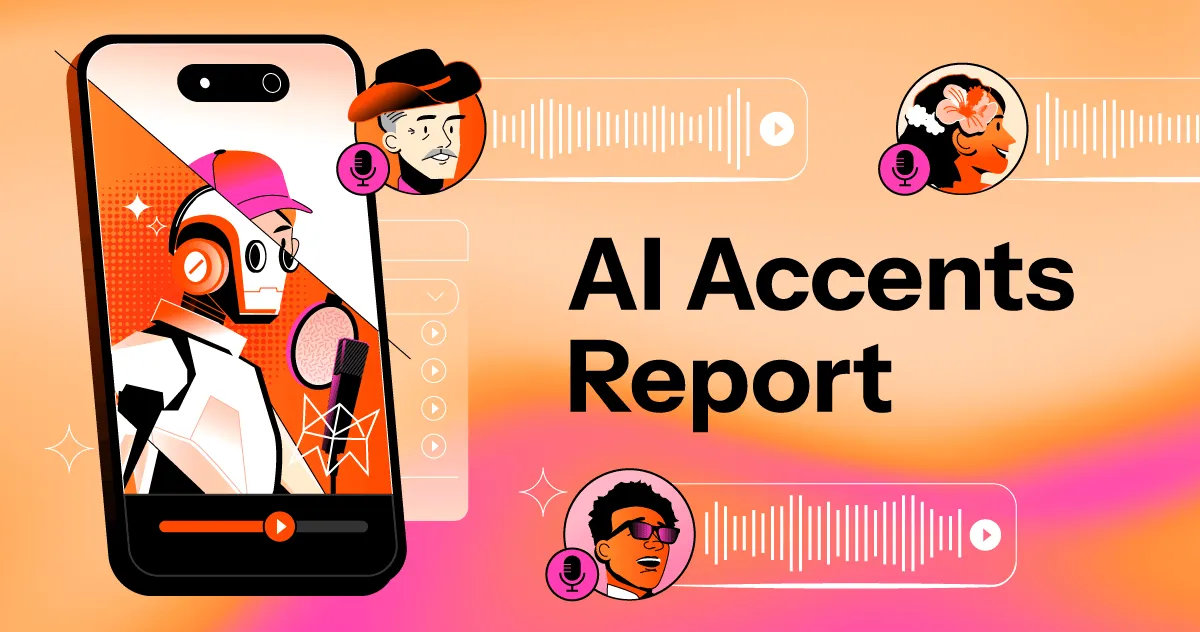
Our AI Accent Investigation
The numbers behind the study
6.5/10
was the average rating for trustworthiness for the Deep South accent, the most trustworthy accent.
5.8/10
was the average rating of authenticity for the Boston and Texans accents, the least authentic accents.
Studies on digital culture, AI, and social media
We used Kapwing’s AI Voice Cloning tool to clone the voices of 15 speakers with different regional U.S. accents. We then played these back to a sample of 1,000 U.S. adults and asked them to rate the accents for authenticity.
Key findings from our studies
Video is changing fast. We study it.
21–33%
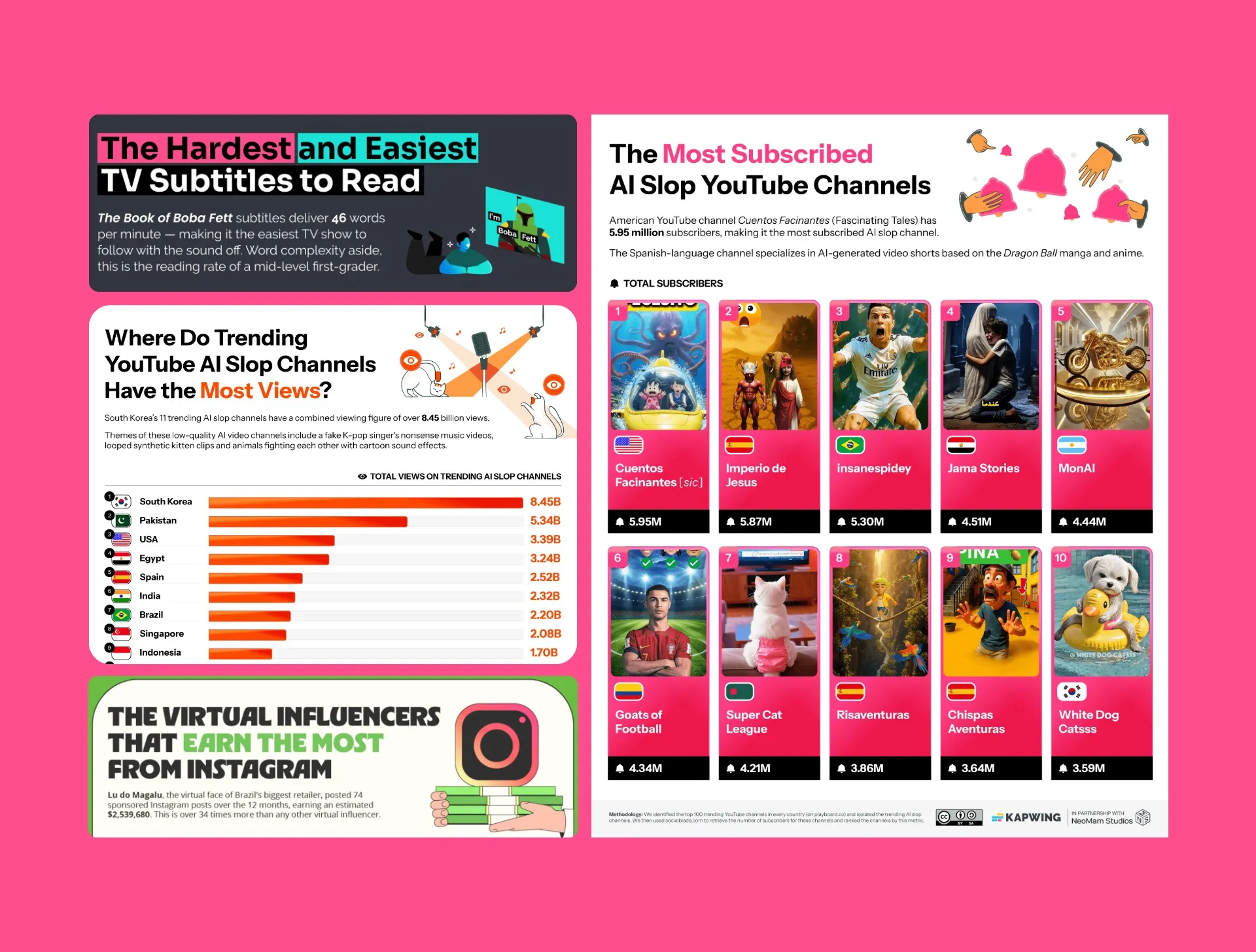
of a new YouTube Shorts feed may be AI slop or brainrot
59%
of videos served to a new TikTok account’s For You page are AI slop
$2.54M
estimated annual earnings for the top virtual influencer in the world, Lu of Magalu
1,131 dubs
for Jesus (1979), the most dubbed movie of all time
77.3%
of people shown in high-paying jobs were depicted as white in AI content
13,399
searches per million people made South Korea the country with the highest deepfake interest
(Report)
About the Kapwing Research Lab
Over 1,000 study citations across press, blogs, newsletters, and academic sources
Independent studies on the tools, trends, and media behaviors shaping online video
Kapwing's Research Lab publishes original, data-led studies on AI-generated content, video creation, platform trends, accessibility, and digital culture.
Our reports explore how technology is changing what people make, what platforms promote, and what audiences actually see in video format.
We publish research for creators, marketers, educators, journalists, and anyone trying to understand the fast-moving world of online media.
Our studies have made global impact with coverage including The Guardian, BBC, MSN, Quartz, and more
If you're trying to understand what's actually happening to online video, you're in the right place.
Coming up next
Industry-leading reports, data analyses, and original research in 2026
.webp)
Spotting AI Videos
A survey exploring how easy the general public finds it to identify AI videos on social media, with practical tips from engineers who work with AI models every day.

AI Music Industry
The most-streamed and top-earning artists using AI to make music, and what the numbers tell us about where the industry is heading
.webp)
AI Accents
Which AI accents sound the most trustworthy and credible? Using Kapwing’s Voice Clone tool, we've created a series of regional American AI accents and commission a survey.
Frequently Asked Questions
We have answers to the most common questions that our users ask.
What is Kapwing Research Lab?
Kapwing Research Lab is a collection of original studies and reports on AI-generated media, video trends, social platforms, accessibility, and digital culture.
What kinds of studies are included?
The page features research on topics including AI bias, AI slop, deepfakes, virtual influencers, AI-generated video prompts, subtitle readability, dubbing trends, and synthetic media.
How often is Kapwing Research updated?
Reports are added as they are published, and we aim to produce 3-6 new studies every year. The latest study section highlights the newest release.
Can I cite Kapwing Research in my own work?
Yes. Journalists, educators, creators, marketers, and researchers are welcome to reference Kapwing’s published studies with attribution.
Get started with your first video in just a few clicks. Join over 35 million creators who trust Kapwing to create more content in less time.