
How to Create a High-Quality Micro-Drama
Micro-dramas have exploded from niche trend to major entertainment format, with the market projected to reach $26 billion by 2030.

Micro-dramas have quickly become one of the fastest-growing formats in short-form entertainment. Short-drama apps are projected to generate $3 billion globally in 2025 outside of China, while the entire micro-drama industry is projected to reach $26 billion in 2030.
For creators, that popularity creates a major opportunity. A micro-drama does not require the budget or production scale of a traditional TV show, but it does require strong storytelling discipline. Every episode needs to grab attention quickly, communicate the conflict clearly, and end with a reason to watch the next part.
This guide breaks down how to create a micro-drama from start to finish, including how to develop the concept, write episodes, film for a vertical screen, edit for retention, and publish the series to encourage viewers to keep watching.
Table of Contents
- What Is a Micro-Drama?
- Scripting a Micro-Drama
- Filming a Micro-Drama
- Editing a Micro-Drama
- Publishing a Micro-Drama
What Is a Micro-Drama?
A micro-drama is a short, serialized drama designed for mobile viewing. Instead of telling a complete story in a single long episode, a micro-drama breaks the story into brief, fast-paced episodes that are usually watched in a 9:16 format.
Originally popularized in China by Douyin and Redbook, the format has recently become viral on TikTok and Instagram.
Micro-dramas are easy to start watching because each episode is short, but they are designed to keep viewers hooked. This makes them especially effective on platforms where people scroll quickly and decide within seconds whether to keep watching.
@bruce.lu84 Episode 7 #chinesedrama #show #drama #shortvideo #dote #skits #shortfilms ♬ original sound - rainbow skits
What Makes a Micro-Drama “High Quality”?
- Every scene has a purpose.
Because episodes are short, every scene should be useful. For example, it might introduce conflict, reveal information, or build toward the next episode. - The hook is clear right away.
Viewers should understand who the main character is, what they want, and what problem they are facing within the first few seconds. - Emotional stakes are easy to understand.
The audience should know why the conflict matters. Even when the story moves quickly, the characters’ choices should feel believable and consistent. - Production feels clean and intentional.
Sound, lighting, and continuity all matter. Clean audio, captions, steady vertical framing, and consistent characters can make a production professional. - Each episode ends with a reason to keep watching.
The ending should feel satisfying enough to complete the moment, but unresolved enough to make the viewer want the next part.
Scripting a High-Quality Micro-Drama
Scripting is one of the most important parts of creating a quality micro-drama.
A strong script gives the series structure, helps the audience understand the conflict right away, and creates enough tension to keep viewers watching from one episode to the next.
1. Write the entire premise in one sentence
Before writing dialogue, define the story in a single sentence. This sentence should explain who the story is about, what problem they are facing, and what is at stake. A micro-drama's premise needs a central problem that can stretch across episodes.
For example: “A young secretary discovers that her powerful boss is stealing her ideas and decides to expose him.”
This kind of premise works because it immediately introduces a character, a conflict, and a goal. If the premise cannot be explained in one sentence, it may be too complicated for a micro-drama.
For example, the popular short-form series Roomies can be summarized in one sentence: a young woman has three weeks to find an apartment, a job, and friends in New York City.
2. Map out the beginning, middle, and ending of the series
Before getting individual episodes, outline where the story starts, what twists happen, and how the conflict resolves. From the example of our workplace rivalry, a basic series plan might look like this:
- The main character discovers that their idea was stolen.
- They confront their powerful boss and get denied.
- They find evidence on the boss's desk, as well as an admission of guilt from a coworker.
- The boss raises the stakes by threatening the main character.
- The main character makes a risky plan.
- The plan almost fails, but the truth is ultimately exposed.
3. Give each episode one clear purpose
Each episode should accomplish one specific thing. It might introduce a character, reveal a secret, create a misunderstanding, or force the main character to make a decision. If an episode doesn't change the story, it should be rewritten or removed.
A helpful way to test an episode is to ask: “What is different by the end of this episode?”
If the answer is unclear, the episode probably needs a stronger purpose.
4. Use a hook, escalation, reveal, and cliffhanger structure
A useful structure for each episode is: hook, escalation, reveal, cliffhanger:
- The hook grabs attention in the first few seconds. This could be a shocking line, a confrontation, or a suspicious text message.
- The escalation makes the situation more intense. The conflict should get harder, more emotional, or more urgent as the episode continues.
- The reveal gives the viewer new information. This might be a secret, a lie, a hidden motive, or a clue that changes how the audience understands the story.
- The cliffhanger creates a reason to watch the next episode.
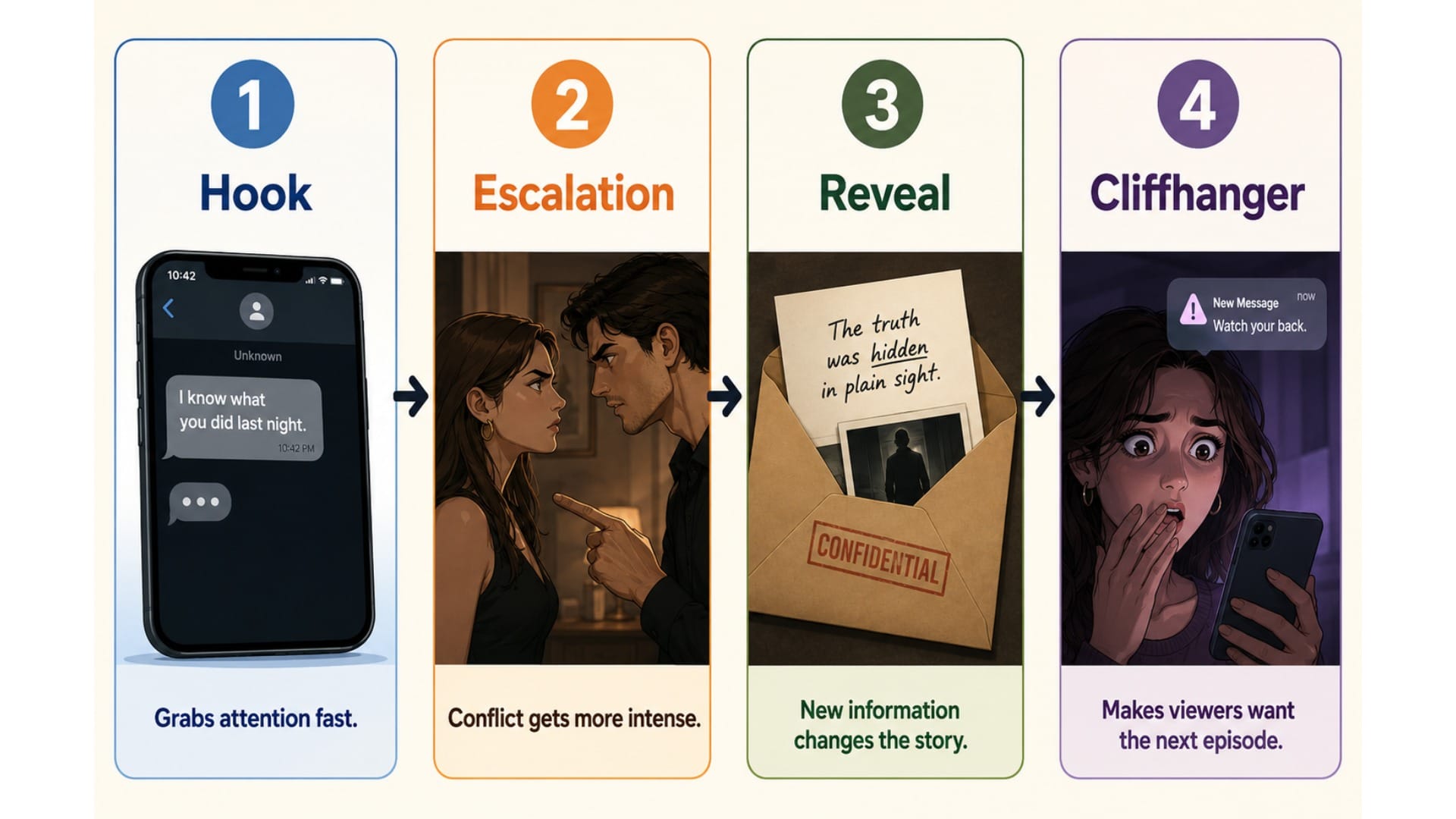
For example, in our workplace story, an episode could open with the main character finding a threat on their desk (hook).
Underneath the note, there might be a photograph of the character's loved ones (escalation). The character might recognize something that was left behind by the perpetrator, indicating that it's a trusted friend (reveal).
The episode would end with the trusted character appearing and saying, “You were never supposed to see that” (cliffhanger).
Filming a High-Quality Micro-Drama
Filming a high-quality micro-drama starts with choosing the right production workflow. Some creators will film with actors, locations, and a camera or phone.
Others may use AI video tools to generate characters, voiceovers, or visuals. Both workflows can work well, but they require different considerations.
Traditional Filming
Traditional filming is the best option when you want full control over each scene. Creators will be able to directly control how the actor delivers the performance, the style and angle of each shot, etc.
However, this workflow requires access to equipment. In order to manually film a micro-drama, you will need to have a small cast, a few filming locations, and decent filming equipment.
1. Plan the scene for vertical video from the start
Film the micro-drama in a 9:16 vertical frame, not horizontally, with the intention of cropping later.
Vertical video changes how you should stage a scene. For example, wide shots often lose detail, while close-ups, medium shots, and over-the-shoulder shots make emotions easier to read.
Before filming, look at the scene through the vertical frame and ask:
- Can viewers clearly see the character’s face?
- Is the most important action centered?
- Are important props, phones, documents, or clues readable?
- Is there too much empty space above or below the subject?
2. Create a simple storyboard before filming
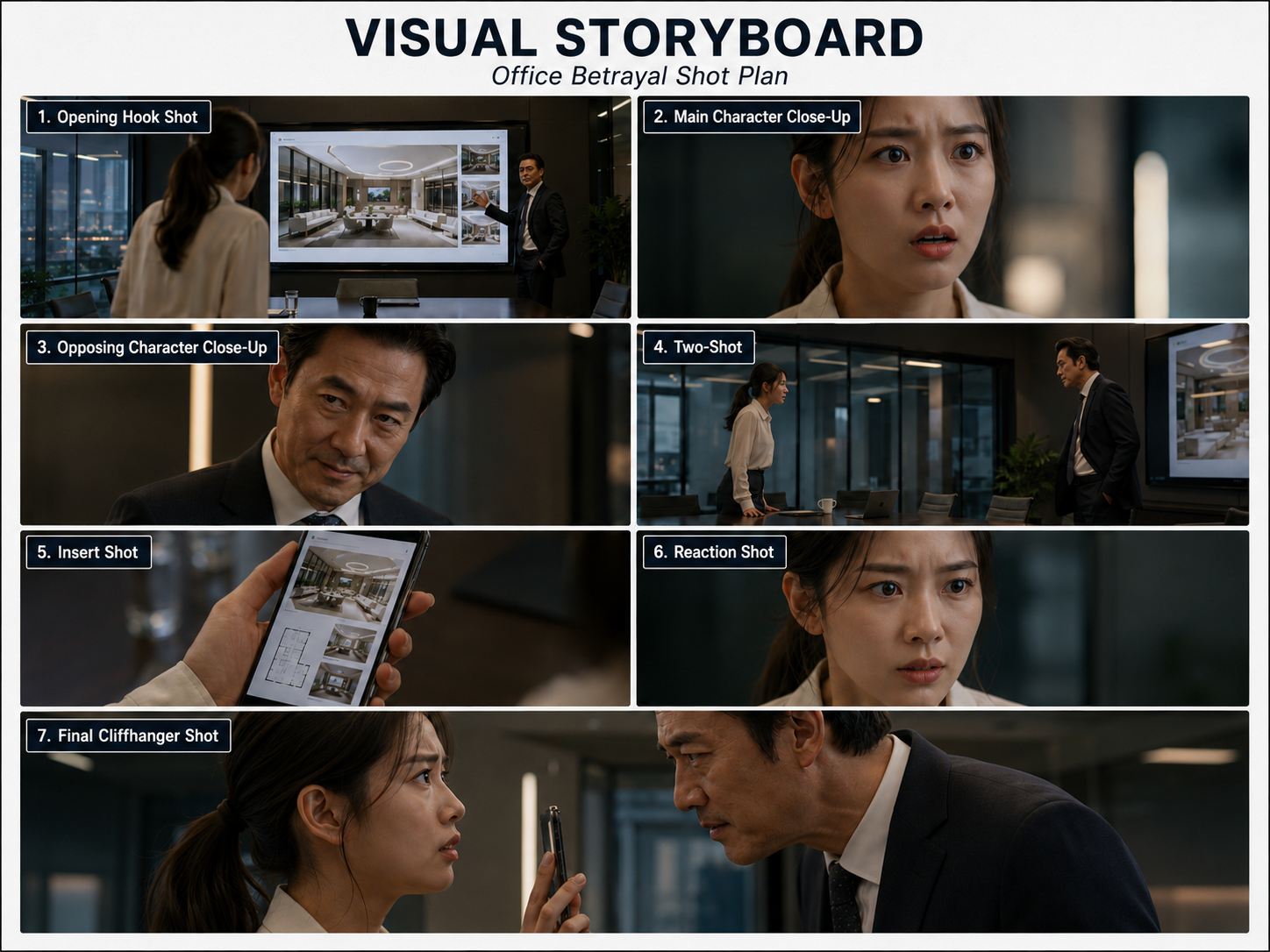
Before filming, it can be helpful to create a storyboard that breaks the micro-drama scene into the key moments. While micro-dramas don't need lots of complex shots, having a practical shot plan will help make the video feel more professional. Some useful shots to include might be:
- Opening hook shot: the first image that creates curiosity or conflict.
- Character close-ups: shots that focus on a character's emotions or reactions
- Two-shot: both characters in the same frame during confrontation or emotional exchange.
- Insert shot: a phone, message, document, photo, object, or clue.
- Cliffhanger shot: the image that ends the episode segways to the next part.
For an office betrayal story, the opening hook might be the main character seeing her design in someone else’s presentation.
The insert shot could be her original file on her phone. The final cliffhanger could be the boss noticing that she has proof.
Below is a Kapwing AI generated example:
3. Capture clean audio
Clear audio is essential for a high-quality micro-drama. Viewers may forgive simple visuals, but if the dialogue is hard to hear, the story is difficult to follow.
Before filming the scene, record a short test and listen with headphones. Check for:
- Echo in the room
- Clothing rubbing against the mic
- Uneven volume between actors
- Background chatter or hallway noise
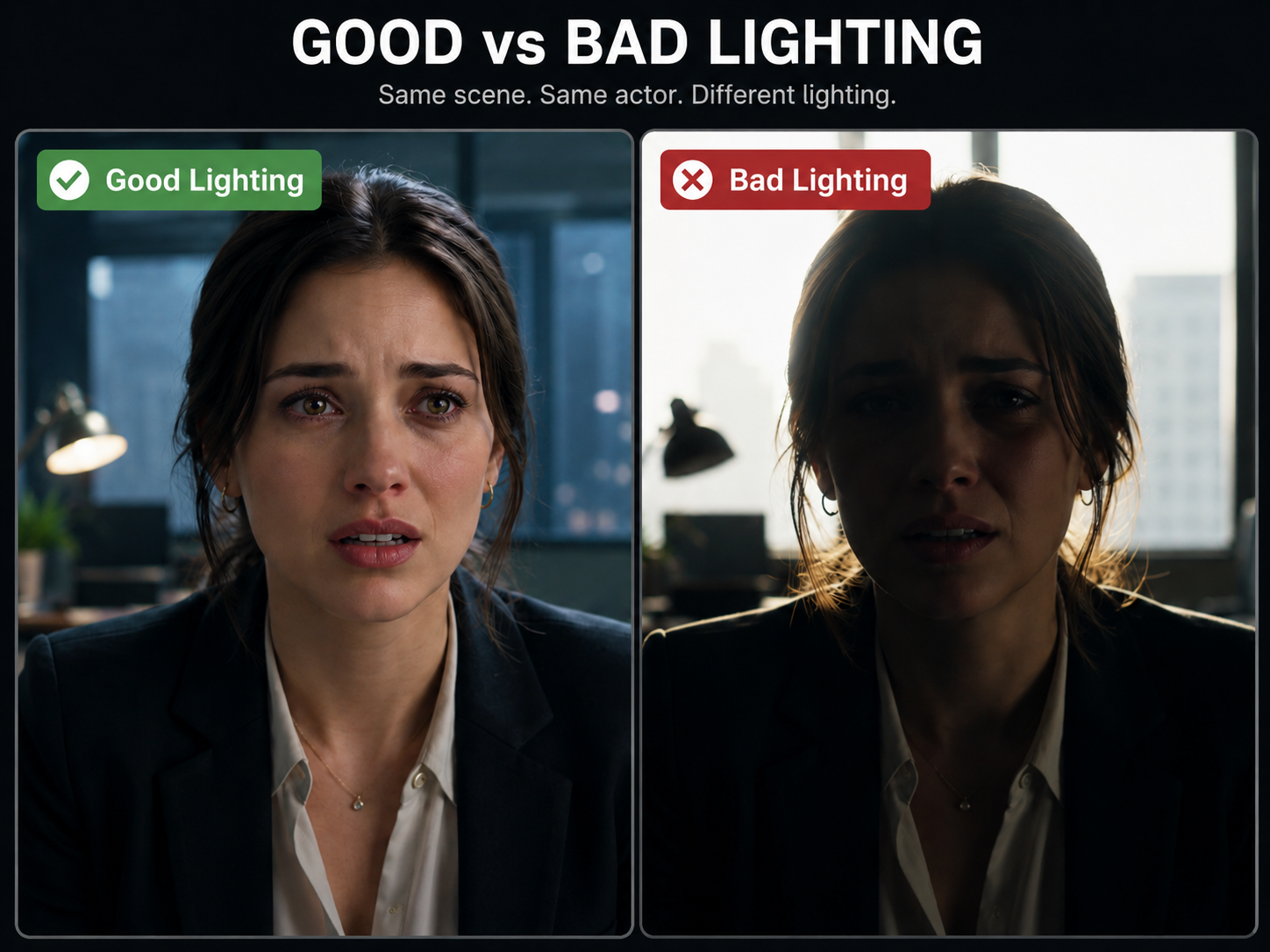
4. Light the actors’ faces clearly
Lighting should help viewers read the characters’ emotions. If the face is too dark or unevenly lit, the emotional beat becomes harder to understand. Use soft, front-facing light. A window, desk lamp, LED panel, or practical room light can work. Avoid placing actors directly in front of bright windows or screens.
For tense scenes, you can use cooler lighting, shadows, or contrast to create mood, but do not sacrifice clarity. The viewer should still be able to read the eyes, facial expression, and emotional shift.
5. Film inserts and visual evidence
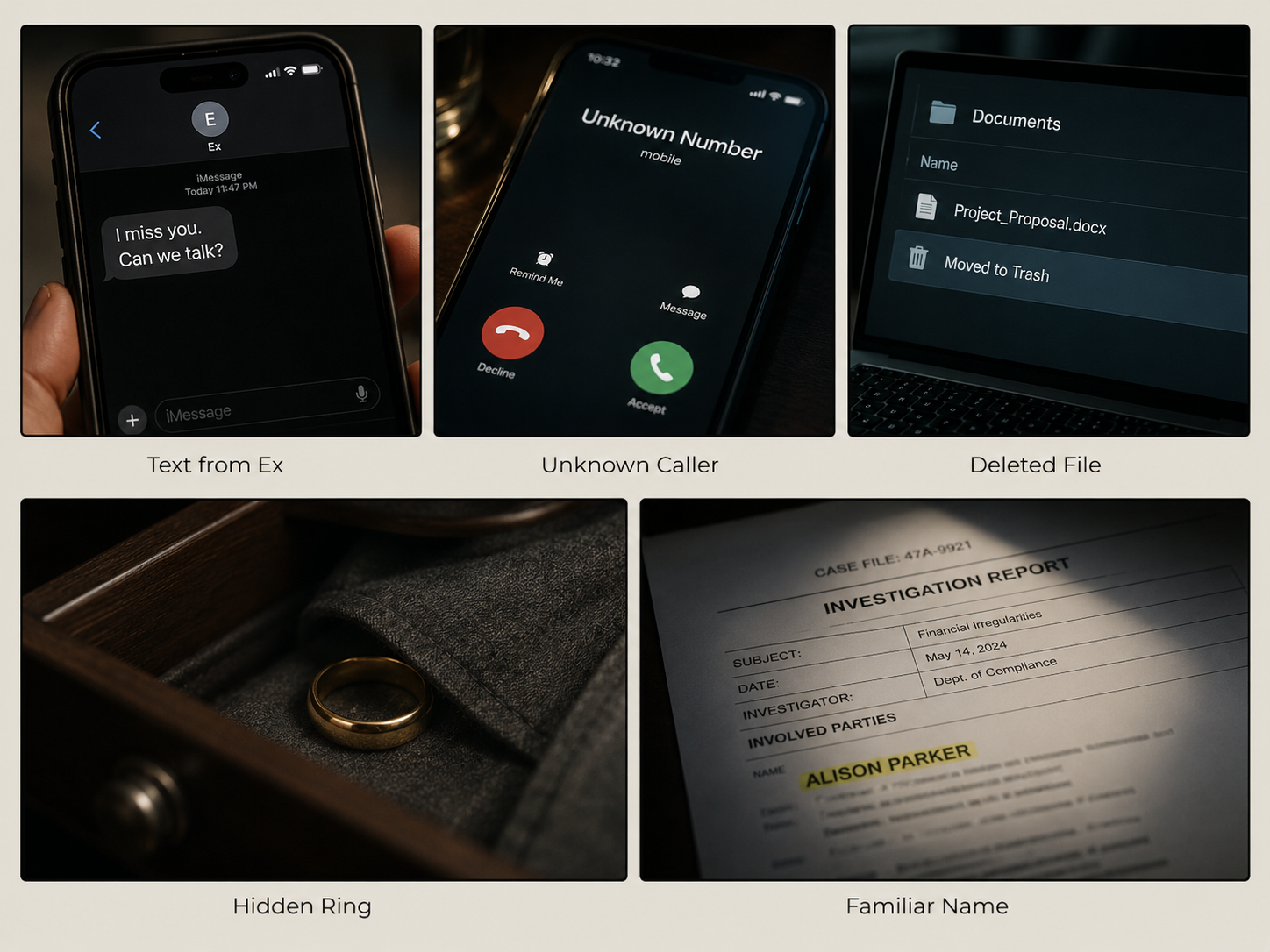
Micro-dramas often use quick visual details to move the story forward without exposition. Instead of having a character explain everything, show the audience the evidence or object that changes the scene. Some examples include:
- A text message from an ex
- A missed call from an unknown number
- A deleted file
- A hidden wedding ring
- A familiar name on an unfamiliar document
- In our office drama, this might be a close-up of a stolen design.
AI-Assisted Micro-Drama Production
AI-assisted production is useful when you want to create a micro-drama without a full cast, crew, or filming location.
However, they still need strong creative direction. The story, characters, visual style, and episode structure should be planned before you start generating scenes.
1. Design consistent characters first
One of the biggest challenges with generating video is keeping your AI actor visually consistent. A character might look slightly different every time they are generated, which can confuse viewers and make the series feel less polished.
Instead of writing a vague character description like “a young woman in an office,” create a more specific character profile:
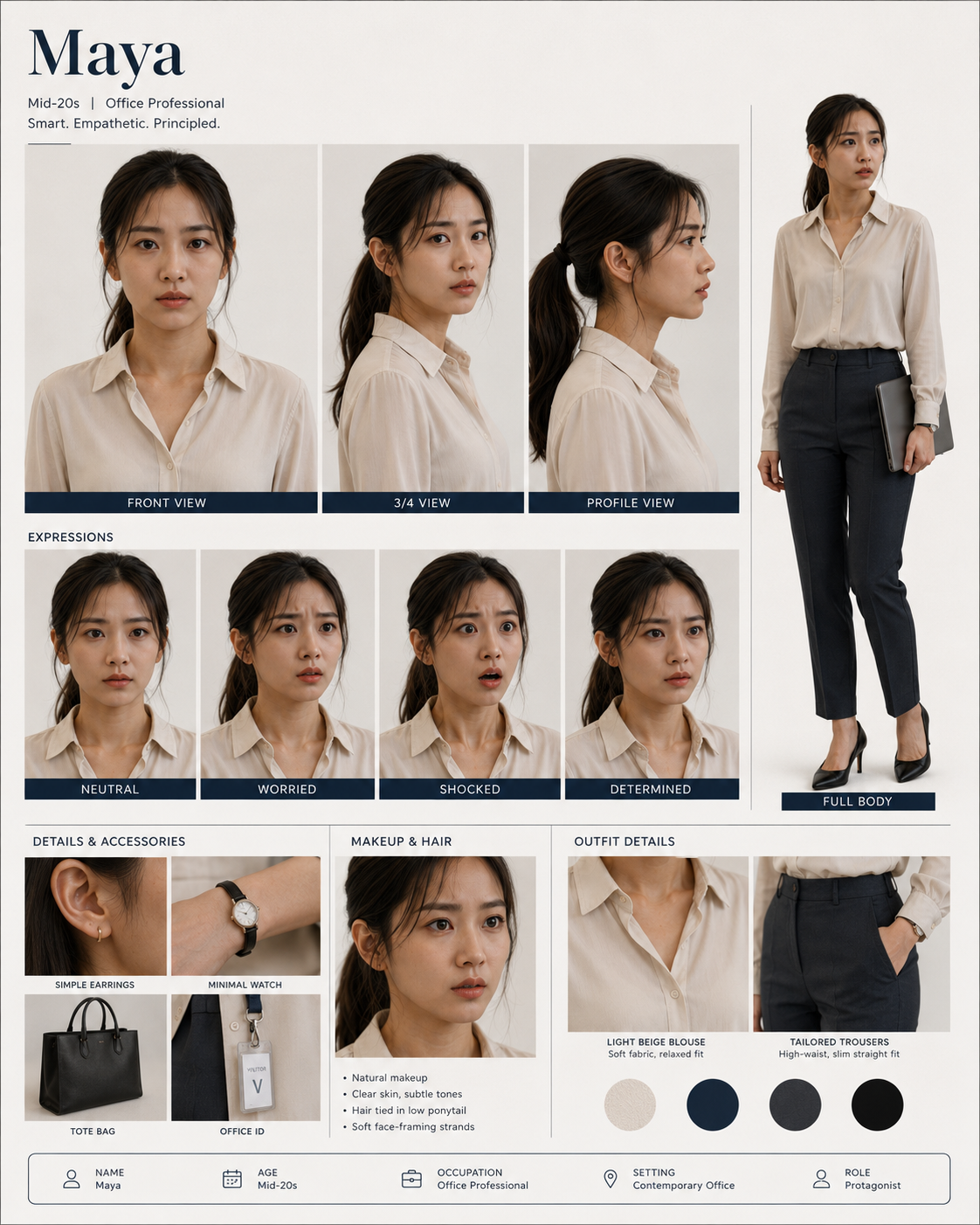
Maya: A 24-year-old junior designer with shoulder-length dark hair, a white button down, simple gold earrings, and a nervous but determined personality. She is ambitious, observant, and slowly becomes more confident as she discovers her boss is stealing her work.
A helpful way to lock in a character is to create a character reference sheet for every major character before producing the series. This reference sheet defines how the character looks, sounds, and behaves.
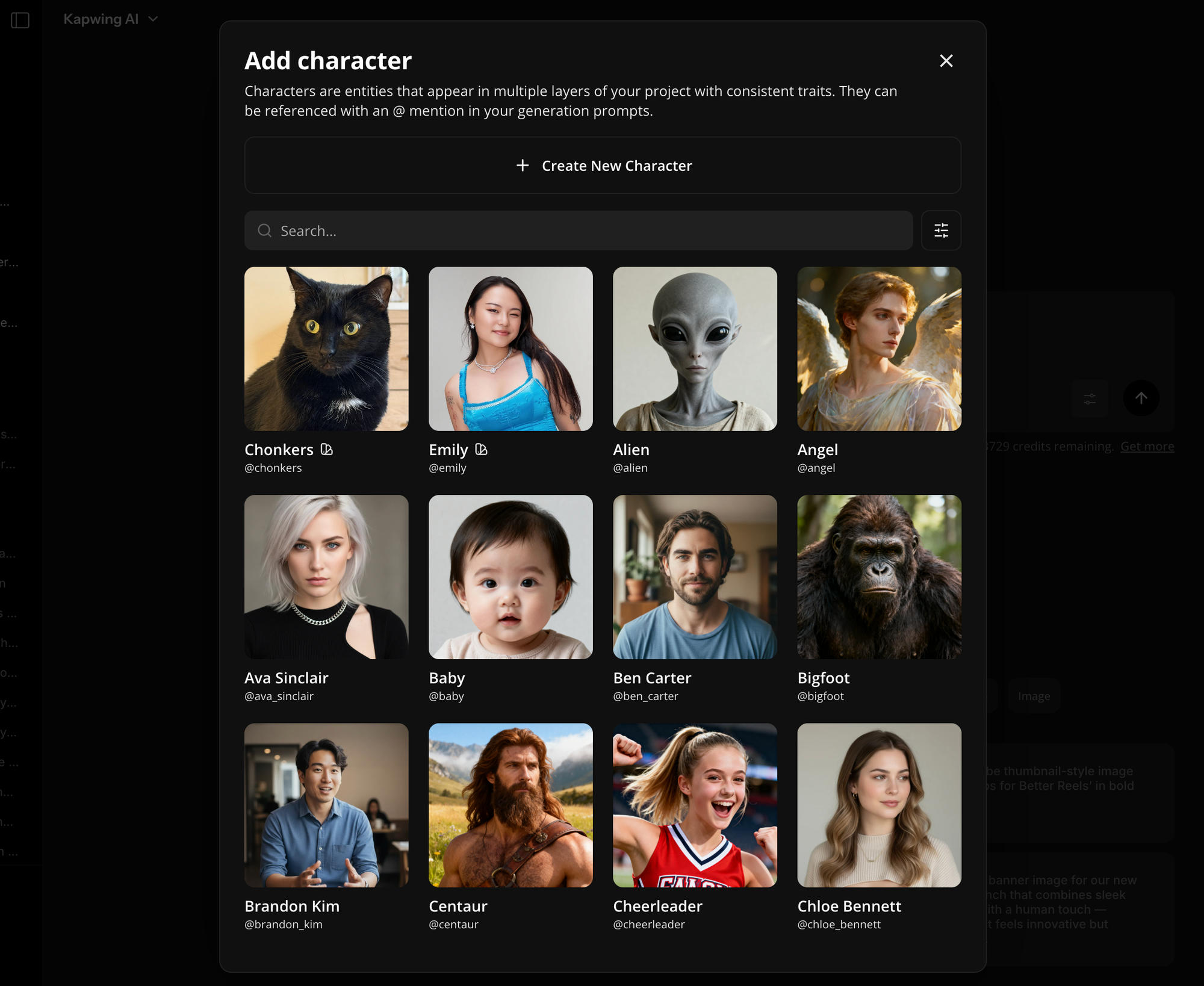
Another helpful tool is Kapwing’s AI character creator. By inputting 1-10 reference images, you can create a reusable and referenceable identity.
These characters are complete with custom voices, making them perfect for generating a micro-drama. There are also various stock characters available to use.
2. Break the episode into short visual beats
Do not try to generate an entire micro-drama episode in one prompt. AI video usually works better when the story is broken into visual beats. For example, an episode about workplace betrayal could be broken into visual beats like this:
- Maya walks into the conference room.
- She sees her design on her boss’s presentation slide.
- Her expression changes from confusion to shock.
- The boss notices her staring.
- Maya looks down at her phone and sees proof that he stole the file.
- The boss steps closer and says, “You should have stayed quiet.”
- Maya realizes he knows she has evidence.
Each beat can become a separate AI-generated clip or image. This gives you more control over the pacing, emotion, and story logic. It also makes editing easier because you can arrange the clips in the exact order you want.
3. Write prompts like shot directions
When generating AI scenes, write advanced video prompts as if you are directing a camera and an actor. A useful prompt structure is:
Character + action + emotion + setting + shot type + lighting + style + format
For example, below is an example prompt for the visual beat: Maya looks down at her phone and sees proof that he stole the file.
Example Prompt
Vertical 9:16 cinematic close-up of Maya, a 24-year-old junior designer with shoulder-length dark hair, wearing a beige blazer and small gold earrings, standing in a sleek glass-walled office at night. She grips a black smartphone tightly in both hands, her knuckles tense, eyes wide with controlled shock as she looks down at evidence on the screen. Behind her, a blurred presentation slide shows a stolen design concept on a conference room monitor. Cool blue office lighting reflects off the glass walls, soft shadows across her face, shallow depth of field, realistic dramatic style, high detail, tense corporate thriller mood.
This is much stronger than just prompting: "Maya looks down at her phone and sees proof that the boss stole the file."
It tells the AI what matters: the character, the emotional shift, the prop, the setting, the camera framing, and the vertical format.
4. Generate extra reaction shots
Reaction shots are especially important in micro-dramas because the format depends on emotion. A shocked look, a guilty pause, or a silent glare can make a reveal feel much more dramatic. When creating an AI-assisted micro-drama, generate more reaction shots than you think you need.
Useful reaction shots might include:
- A character looking suspicious
- A love interest hesitating before answering
- The antagonist, after causing trouble
- A character looking at a phone in shock
These shots give you flexibility in the edit. If one generated clip feels awkward or the action does not look natural, you can cut to a reaction shot instead.
Editing a High-Quality Micro-Drama
Editing is where a micro-drama becomes fast, clear, and bingeable. Every cut should help the audience understand the conflict faster, feel the emotional stakes more strongly, or want to continue to the next episode.
1. Edit for pacing, conflict, and compression
In a micro-drama, the opening should feel like the viewer has arrived at the most interesting part of the scene. Instead of starting with context, start with pressure, like a character caught in a lie or the line that changes the relationship. Context can come after the hook, once the viewer has a reason to care.
From there, cut every moment that does not move the story forward. Every shot should reveal information, increase tension, or set up the cliffhanger. A useful editing test is to ask: What changes because of this shot? If the answer is “nothing,” remove or trim it.
Most micro-drama episodes are around 2 minutes.
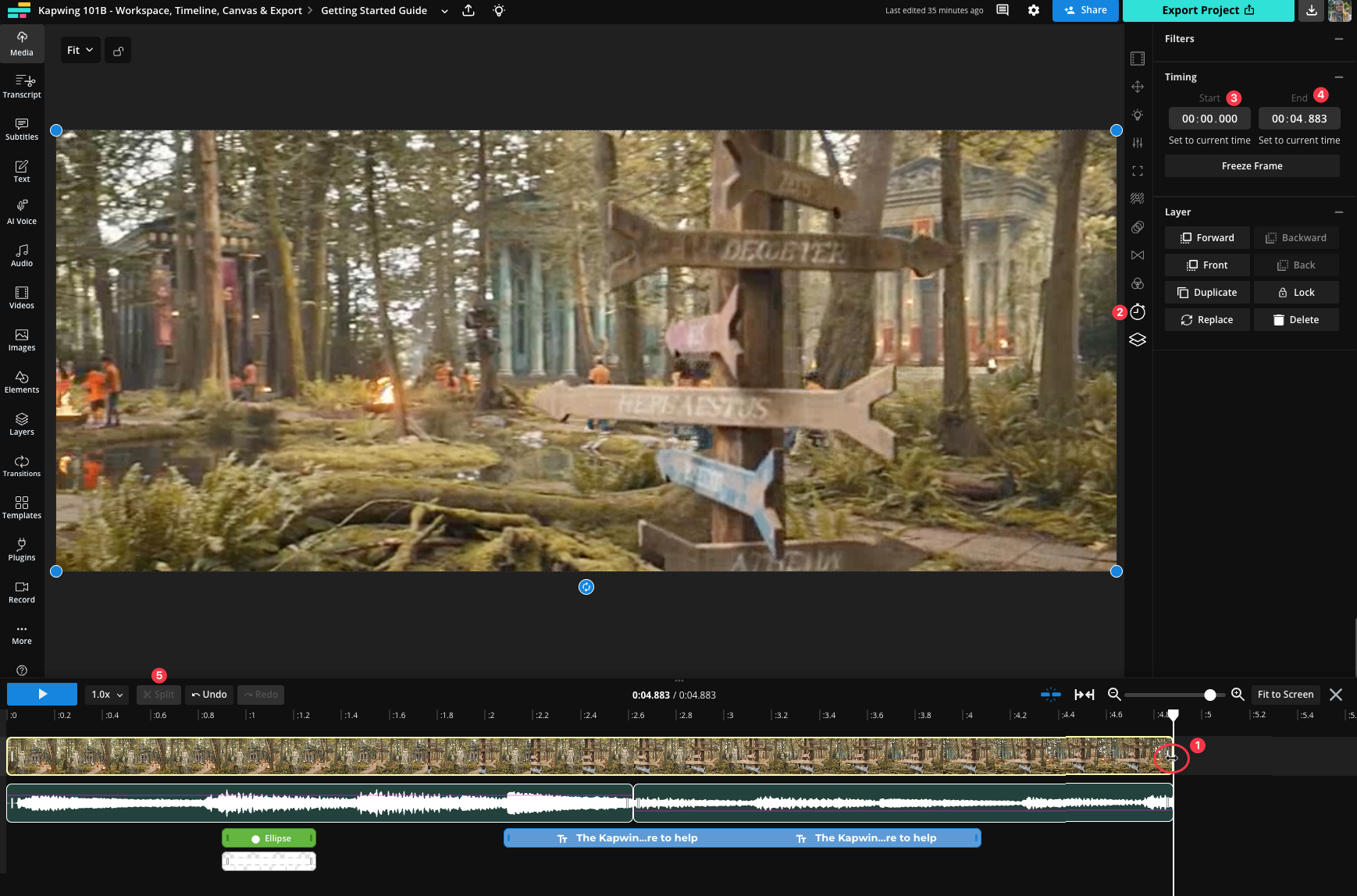
Kapwing can help with this pacing process by giving creators a timeline where they can trim clips, remove space, rearrange shots, and test versions of the same scene.
For example, you might compare an edit that opens on a line of dialogue with one that opens on a reaction shot, then choose the version that creates tension faster.
2. Add captions that support the drama
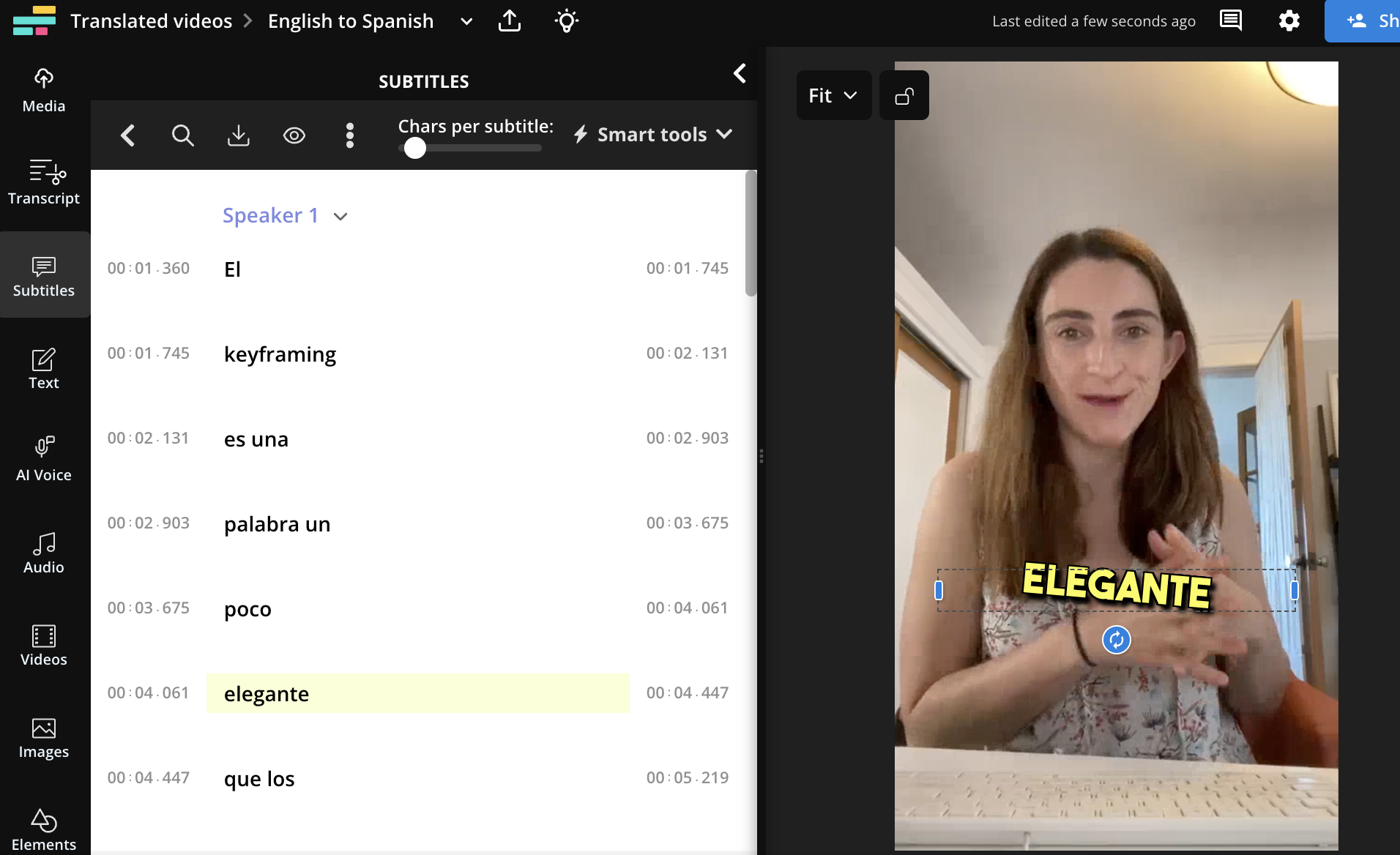
Captions are essential for micro-dramas because many viewers watch short-form videos with the sound low or muted. They should make the story easier to follow without distracting from the performance or covering important visual details.
Kapwing can help with this step because you can generate subtitles automatically, then manually edit them afterward for accuracy, timing, and readability. After the captions are generated, you can fix mistakes, shorten long lines, adjust phrasing, and time captions to land exactly with key dramatic moments.
This is especially useful for micro-dramas, where a caption may need to appear at the exact moment a character realizes something, pauses before a confession, or delivers the final line before a cliffhanger.
3. Format for vertical viewing before publishing
Micro-dramas are usually watched on phones, so the final video should feel like it was made for a mobile screen from the beginning. Faces, captions, phone screens, clues, and title text should all be easy to see without viewers needing to zoom in.
Safe zones are especially useful here because it shows where platform interface elements, such as usernames, captions, like buttons, comment buttons, and share icons, may appear on different social platforms.
This helps creators make sure important story details are not covered or cut off after posting.
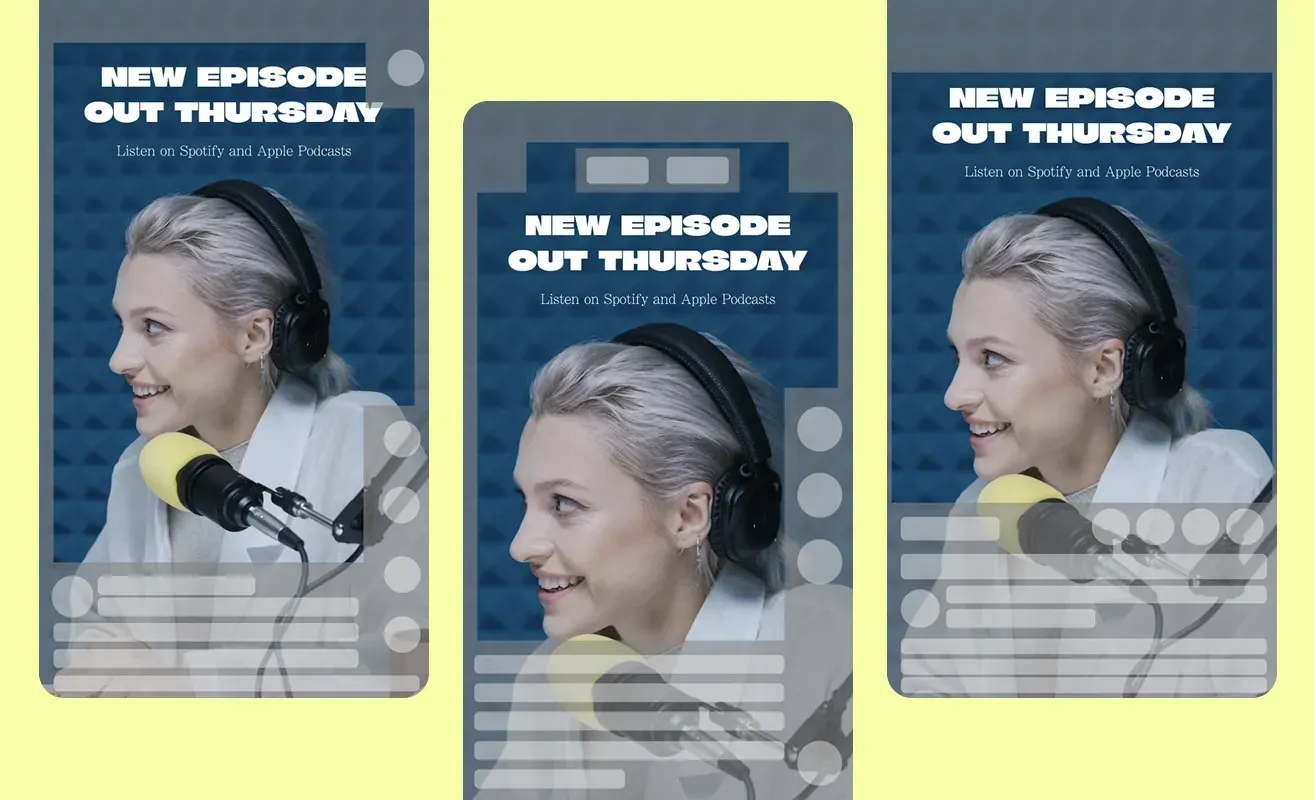
Before exporting, check:
- Are faces centered and readable?
- Are captions inside the safe area?
- Are phone screens, documents, or clues easy to see?
- Is the title text clear and not blocked by platform buttons?
- Does the final frame work as a strong transition into the next episode?
Publishing a High-Quality Micro-Drama
Publishing a micro-drama is different from posting a standalone short video. Because the format is serialized, each episode should help viewers understand where they are in the story and make it easy for them to continue watching. A strong publishing strategy turns individual clips into a bingeable series.
1. Package each episode as part of a series
Before publishing, make sure every episode clearly belongs to the same micro-drama. Use a consistent title, episode number, cover style, caption format, and visual identity across the series. This helps viewers recognize the story when it appears in their feed and makes it easier for new viewers to find the beginning.
A consistent publishing format could include:
- Series title
- Episode or part number
- Short conflict-based caption
- A consistent thumbnail templates
- Recurring hashtags or keywords
The goal is that viewers can recognize the micro-drama at a glance, even if they see the episodes out of order.
2. Make the next episode easy to find
Since micro-dramas are built for binge-watching, viewers should never have to search too hard for the next part. Depending on the platform, you can make the series easier to follow by:
- Adding episodes to a playlist
- Pinning the first episode to your profile
- Including the episode number in the title or cover
- Using consistent thumbnails so episodes are easy to recognize
- Referencing the previous or next part in the caption when useful
This is especially important for cliffhanger-heavy stories. If viewers want to know what happens next but cannot find the next episode, the series loses momentum. Clear organization keeps the audience moving from one part to the next.
3. Repurpose the series across platforms
Once an episode is ready, adapt it for the platforms where your audience is most likely to watch. TikTok, Instagram Reels, YouTube Shorts, and other vertical platforms all support short-form storytelling, but the best caption style, cover frame, and viewer behavior can vary.
Repurposing should not mean uploading the same file everywhere without review. Small changes can make the episode easier to follow on each platform.
Before posting, check whether the captions are readable, the title is visible, the cover frame makes sense, and the main action is not covered by platform buttons.