We Tested Two Ways to Translate YouTube Videos: What the Data Shows
Only 43% of video creators translate their content into other languages. Even fewer publish that translated content on dedicated localized channels
Most creators who do try localization start with the lowest-effort option available: YouTube's built-in auto-dubbing feature.
But is the easiest path also the most effective?
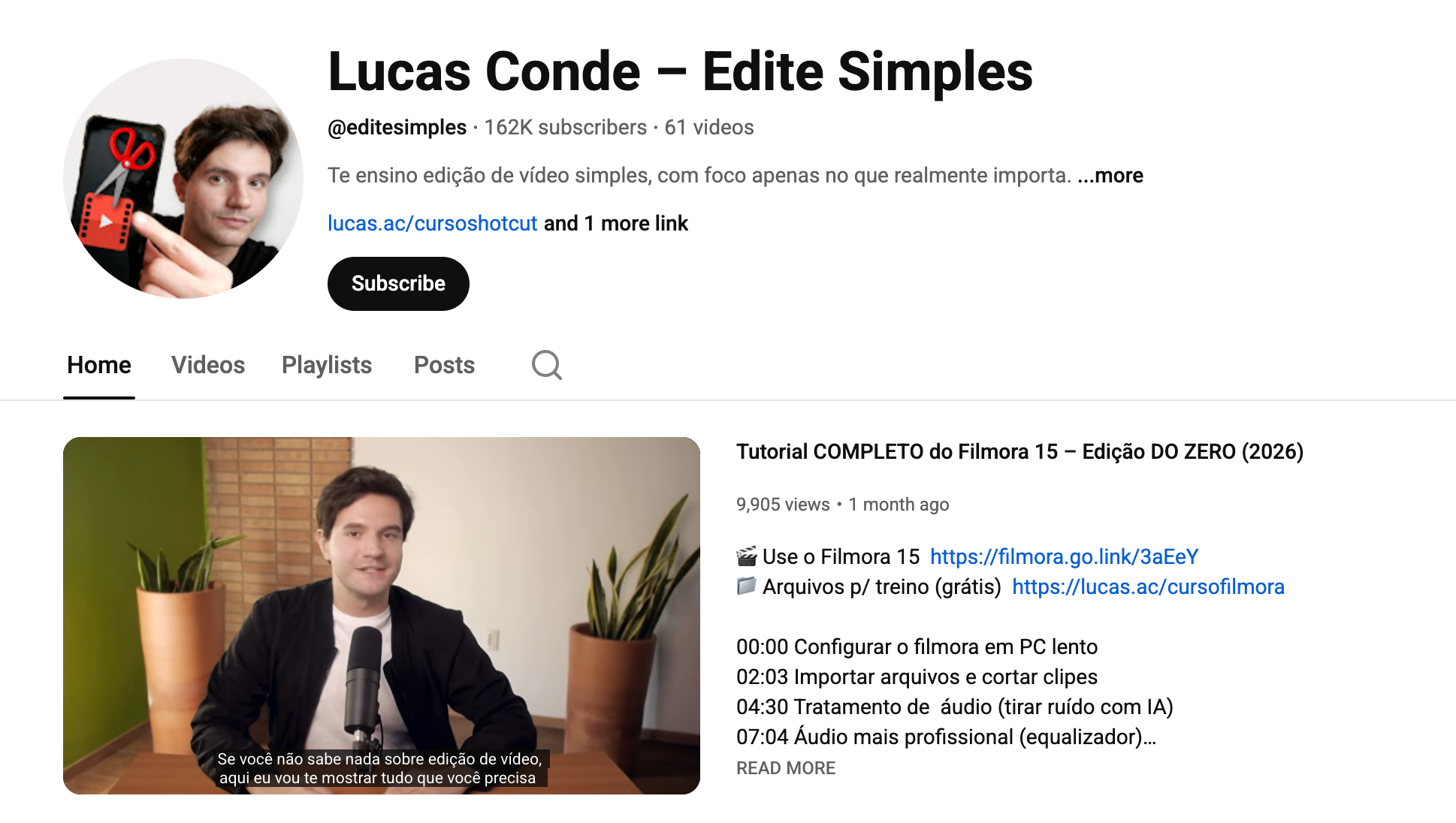
Lucas Conde, a Portuguese-speaking YouTube creator with 162,000 subscribers and a Kapwing affiliate, wanted to find out.
Lucas ran a side-by-side test. First, he took the same viral video, dubbed it into Spanish, and published it two ways on the same day. One version went up as a dubbed audio track on his main channel using YouTube's multi-language audio feature. The other went to a brand-new, dedicated Spanish-language channel.
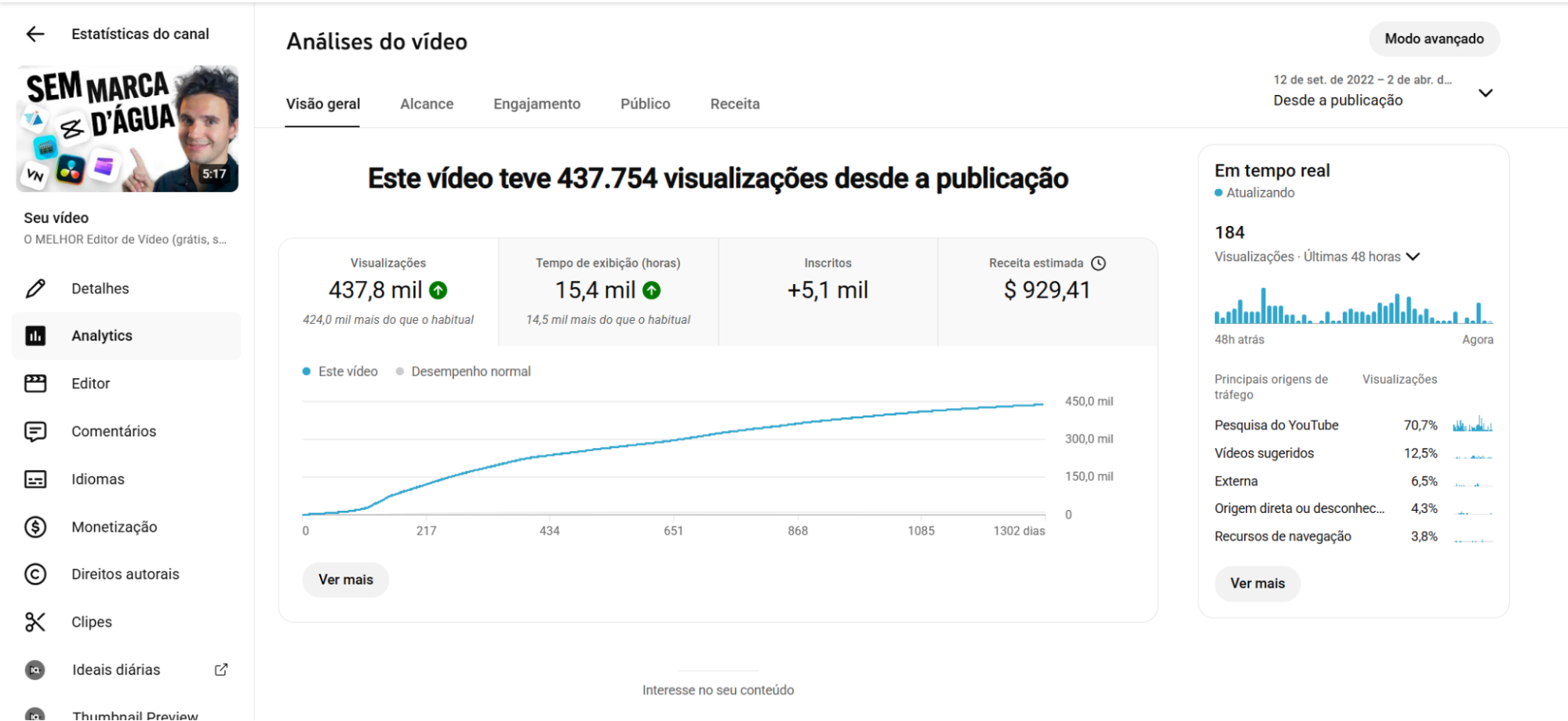
The results weren't even close. After 90 days, the audio track on his main channel had 32 views. The dedicated channel had 3,897.
For creators thinking about dubbing their videos, Lucas’s test offers a practical roadmap for what to do next.
Why Lucas Decided to Go Multilingual on YouTube
Lucas's main channel produces content in Portuguese, primarily targeting Brazilian audiences. Before the experiment, his analytics showed that only about 2% of his viewership came from Spanish or English-speaking countries.
Nothing in the numbers pointed to obvious untapped demand. But something else did.
"I was surprised when I saw comment sections full of replies in Spanish," he says.
Those comments signaled interest that wasn't showing up in the view counts. Viewers were finding his content and engaging with it, but the language barrier limited how far it could travel.
He chose Spanish as his first target language for a specific reason: cultural proximity. Portuguese and Spanish speakers across South America share many cultural references, and Portugal and Spain are neighboring countries. The content wouldn't just translate linguistically. The audience context would carry over, too. That mattered more to Lucas than chasing the largest possible market.
"I consciously didn't opt for translating my Portuguese content straight to English," Lucas explains.
For English, he preferred recording from scratch on a separate channel using his real voice and accent, preserving "that important human touch." But for Spanish, where the cultural gap was small, AI dubbing could handle the translation without losing the content's feel.
The Experiment
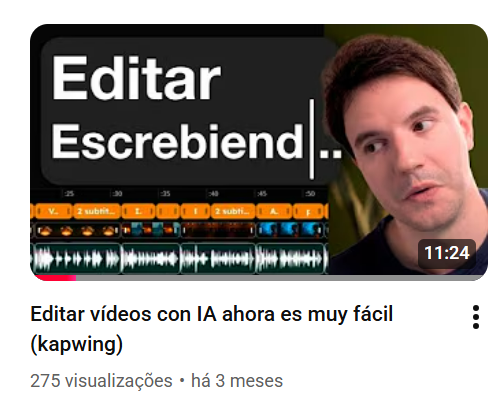
Lucas chose one of his top-performing Portuguese videos, "O MELHOR Editor de Vídeo Gratis" (The Best Free Video Editor), as the test subject.
The video was already receiving steady daily traffic from Brazilian viewers, giving him a reliable baseline.
He loaded the original video into Kapwing's AI Dubbing tool and generated a Spanish-language audio track.
From there, he published the dubbed content in two ways simultaneously.
Path A: YouTube's Multi-Language Audio Track
YouTube allows creators to upload additional audio tracks in different languages to a single video. Viewers can switch between tracks in the video's settings. Lucas exported the dubbed .wav file from Kapwing and uploaded it to his main Portuguese channel as a Spanish audio track. He also added a localized Spanish title and description within YouTube's language settings.
This is the approach YouTube's auto-dubbing feature is designed to enable. Zero friction. The dubbed audio lives alongside the original video, and YouTube's algorithm serves the appropriate language version to the right audience.
(For a full walkthrough of this upload process, see Kapwing's guide to making multi-language audio tracks for YouTube.)
Path B: A Dedicated Channel
On the same day, Lucas uploaded the identical dubbed video as a standalone upload to a brand-new Spanish-language YouTube channel. Zero subscribers. Zero watch history. No momentum.
Crucially, he didn't just re-upload the same assets. He created a new thumbnail, title, and description, all designed from scratch for a Spanish-speaking audience.
Both versions used the same Kapwing-dubbed audio. The only variable was distribution.
The Results
Path A: 32 Views in 90 Days
The Spanish audio track on Lucas's main channel accumulated just 32 views over 90 days. For a video already generating consistent Portuguese traffic daily, that number was almost invisible.
"32 views were almost nothing," Lucas says. "That left me wondering if there was something wrong with the dubbing or the packaging."
There wasn't. The same dubbed audio performed completely differently on the new channel.
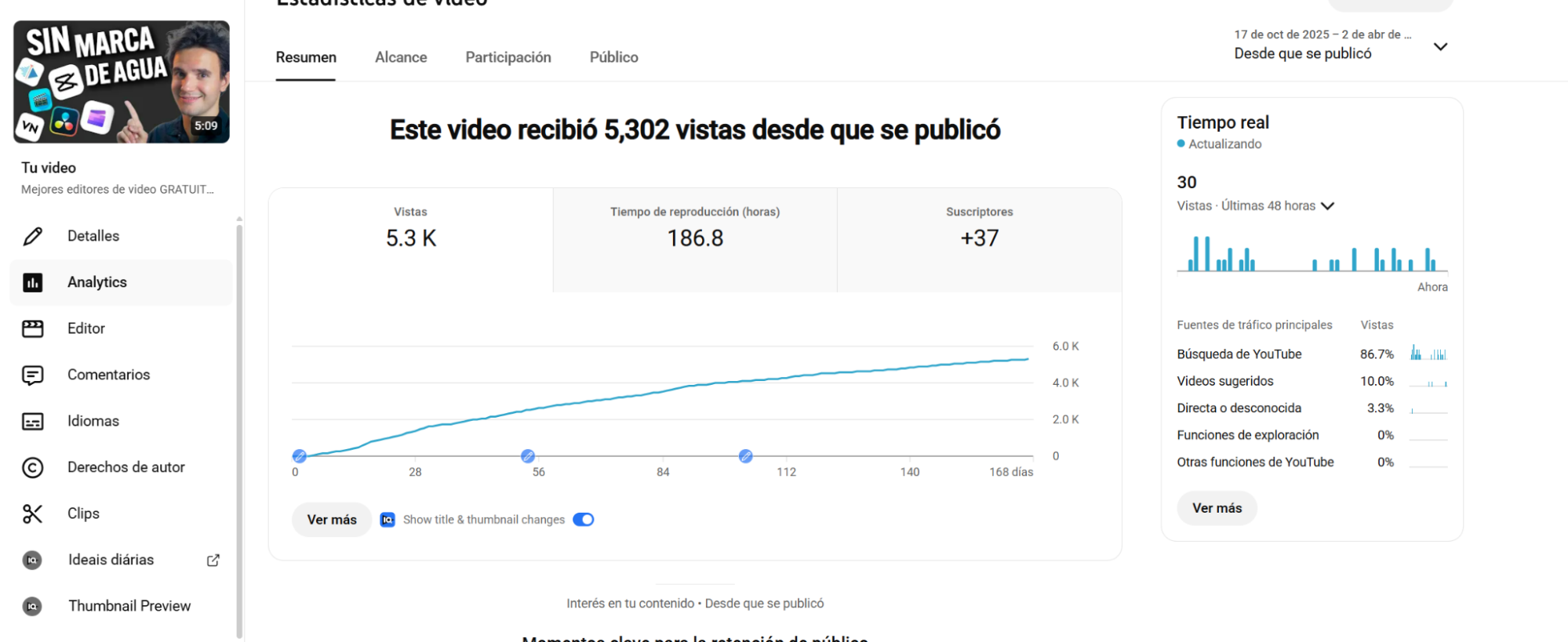
Path B: 3,897 Views in 90 Days
The dedicated Spanish channel told a different story. Within the first 24 hours, the video picked up 8 views — modest, but notable for a channel with no subscribers. Over 90 days, that grew to 3,897. At the time of the interview, the video had reached 5,300 views and was still generating healthy real-time traffic.
That's over 100x the performance of the audio track, from the same dubbed video, published on the same day.
"The data on the dedicated Spanish channel just showed me crystal clear that having a dedicated channel works better for audience funneling," Lucas says.
Engagement Told the Same Story
The gap extended beyond view counts.
"I only received genuine foreign comments on the separate dedicated language YouTube channel," Lucas says.
The audio track on his main channel generated no meaningful foreign-language engagement at all. Retention followed the same pattern. The Spanish-speaking audience simply didn't find or didn't engage with the audio track version.
Why the Dedicated Channel Won
The 100x gap demands an explanation. The audio was identical. The content was the same. What was different?
On paper, YouTube's multi-language audio feature should work.
YouTube's own data shows that creators using multi-language audio tracks see over 25% of their watch time from non-primary languages, and the feature has rolled out to millions of creators.
But those aggregate numbers, drawn heavily from large channels like Jamie Oliver and MrBeast, may obscure what happens on a smaller scale.
At Smaller Scale, Audio Tracks Struggle
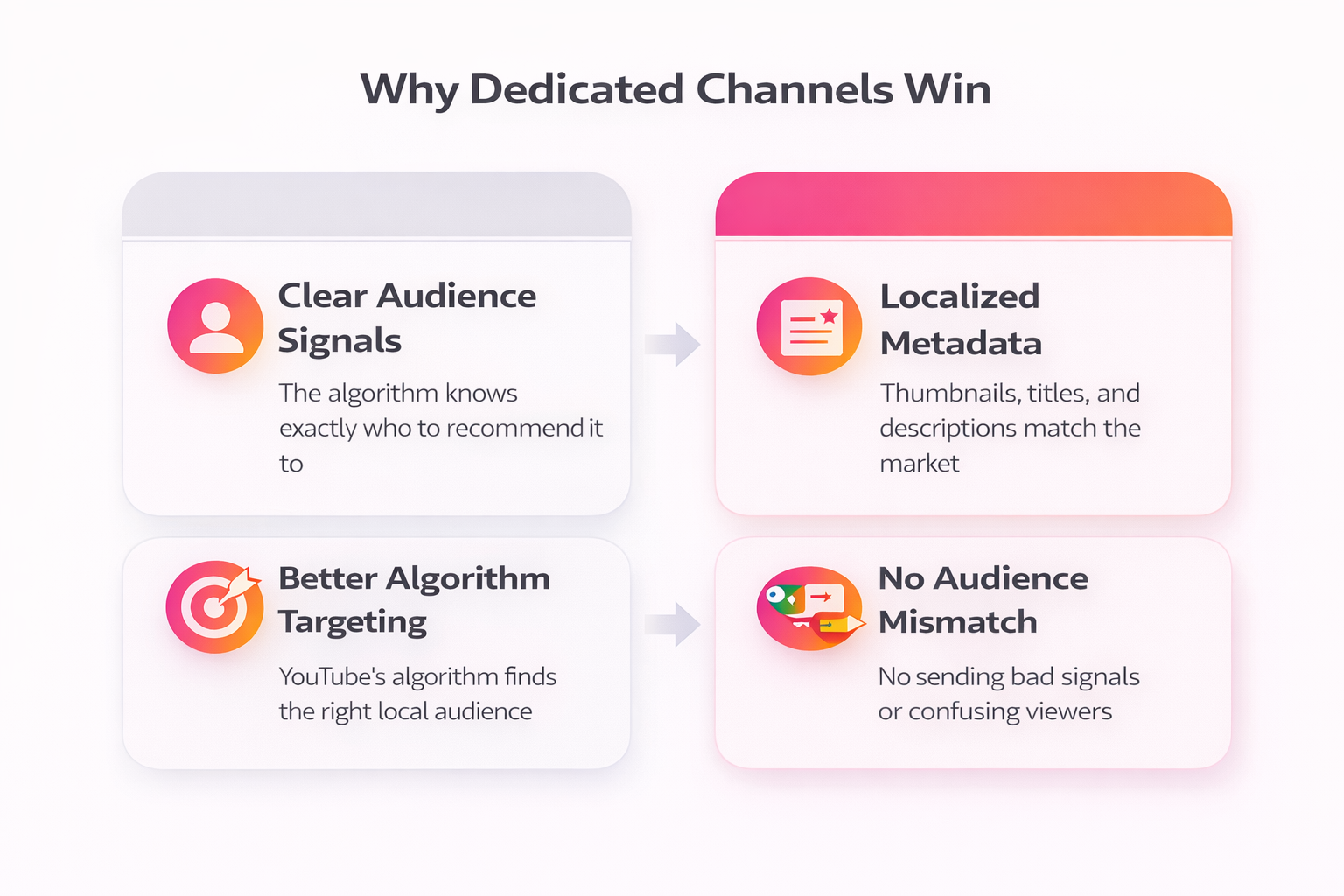
When Lucas enabled multi-language audio, his main channel started showing English-translated content to his Portuguese-speaking audience, sending "bad signals and wrong audience to your videos."
The algorithm still struggles with placing and positioning titles, thumbnails, and descriptions for dubbed audio tracks.
If those elements aren't calibrated for the target language audience, the viewer never clicks.
YouTube's automated handling of metadata for alternate audio tracks isn't precise enough, at this stage, to match a hand-built localized upload.
Dedicated Channels Send Clearer Signals
"Separate channels are king, all the way," Lucas says. "They're much more effective in reaching local markets."
A dedicated channel points every signal in the same direction: language, audience demographics, watch patterns, metadata.
There's no confusion about who the content is for. The algorithm can recommend it to Spanish-speaking viewers without trying to reconcile it with a Portuguese channel's existing audience profile.
Localized Metadata Makes or Breaks Discovery
This is where Lucas's approach gets tactical. You see, he isn’t just translating metadata. Lucas researches what works in each language's competitive landscape from scratch.
For his Spanish channel, that meant searching the same topic on YouTube entirely in Spanish, identifying which videos were ranking highest, and spotting the title and thumbnail patterns they had in common. Then he designed his own thumbnail to match those patterns while adding his own creative twist.
"When dealing with another language within your niche, you'll find yourself surrounded by different competitors and consistent, repeating title and thumbnail patterns in that language," he explains.
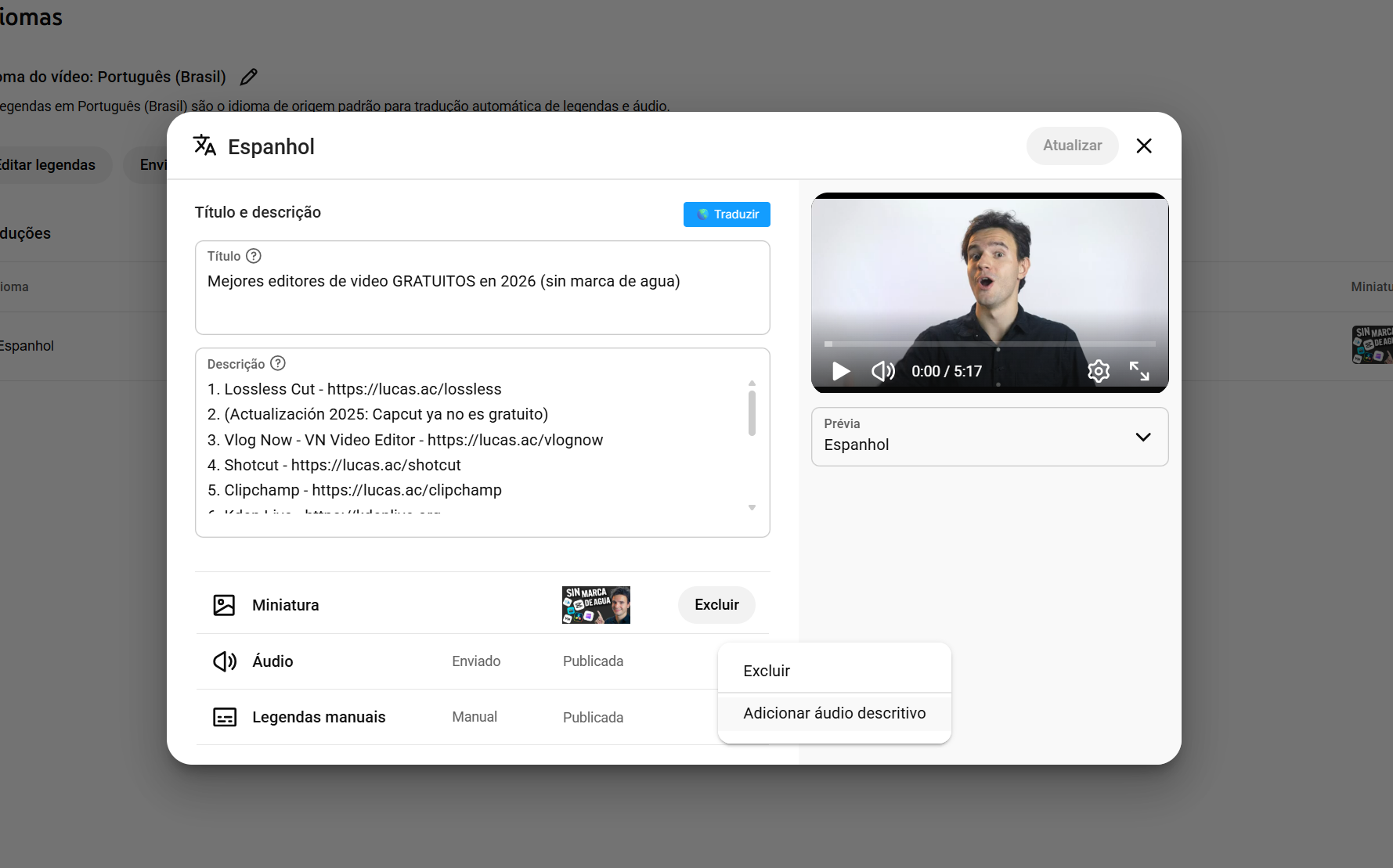
He flagged an important warning too: reusing the same thumbnail across channels owned by the same creator can trigger YouTube's duplicate content penalties. Every localized version needs its own visual identity.
The result? 5,300 views on a brand-new channel with just 51 subscribers.
The Dubbing Workflow
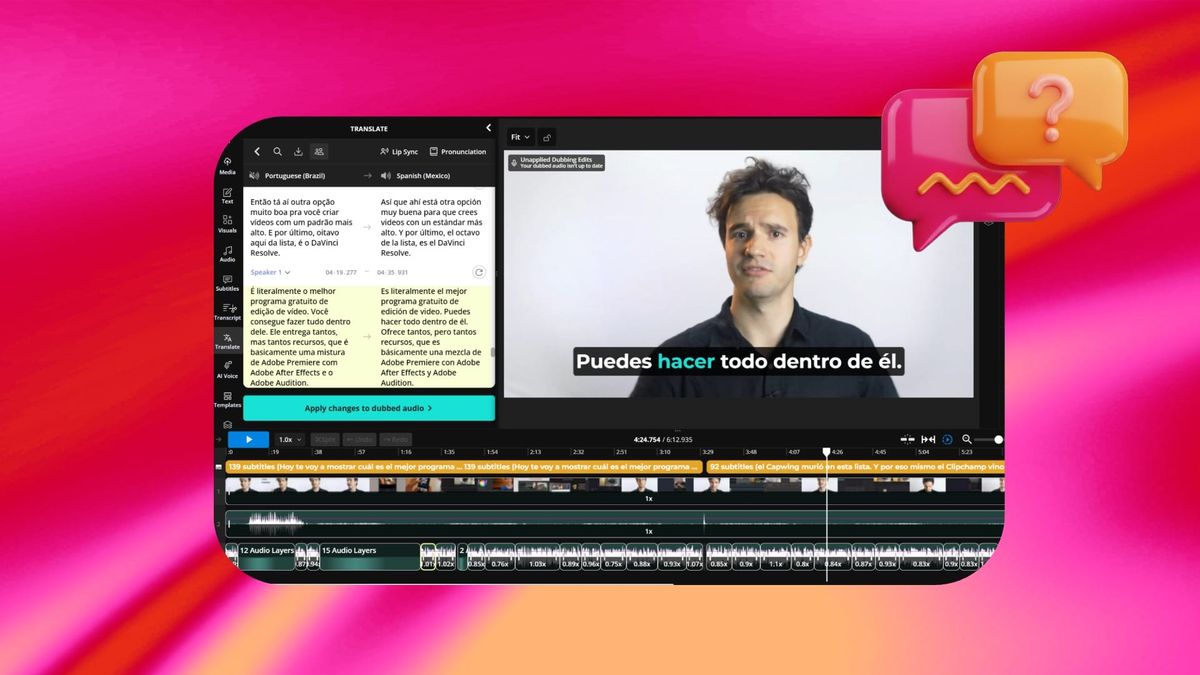
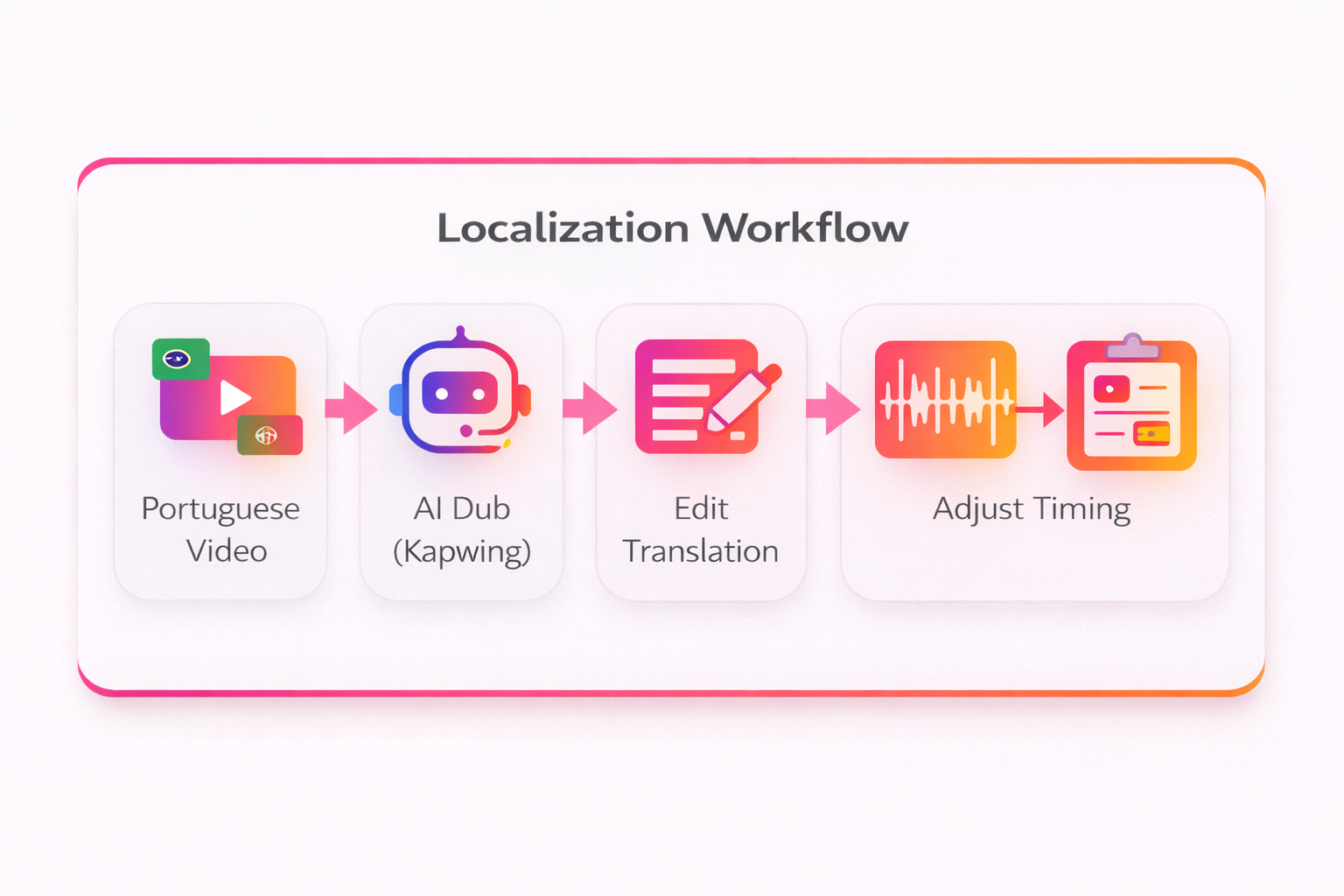
Lucas used Kapwing's AI Dubbing for the Spanish audio.
"Kapwing's auto-dub feature is great because it does the grind work for you," he says. "The work you need to do afterwards is more focused on light adjustments."
Two features shaped his workflow.
The translation tab lets you view and edit the translated text side by side with the original language. Lucas used this to catch technical terms, product names, and software-specific language that the AI didn't nail on the first pass.
"You'll always need to adjust one thing here and there. But it's real quick and easy to fix."
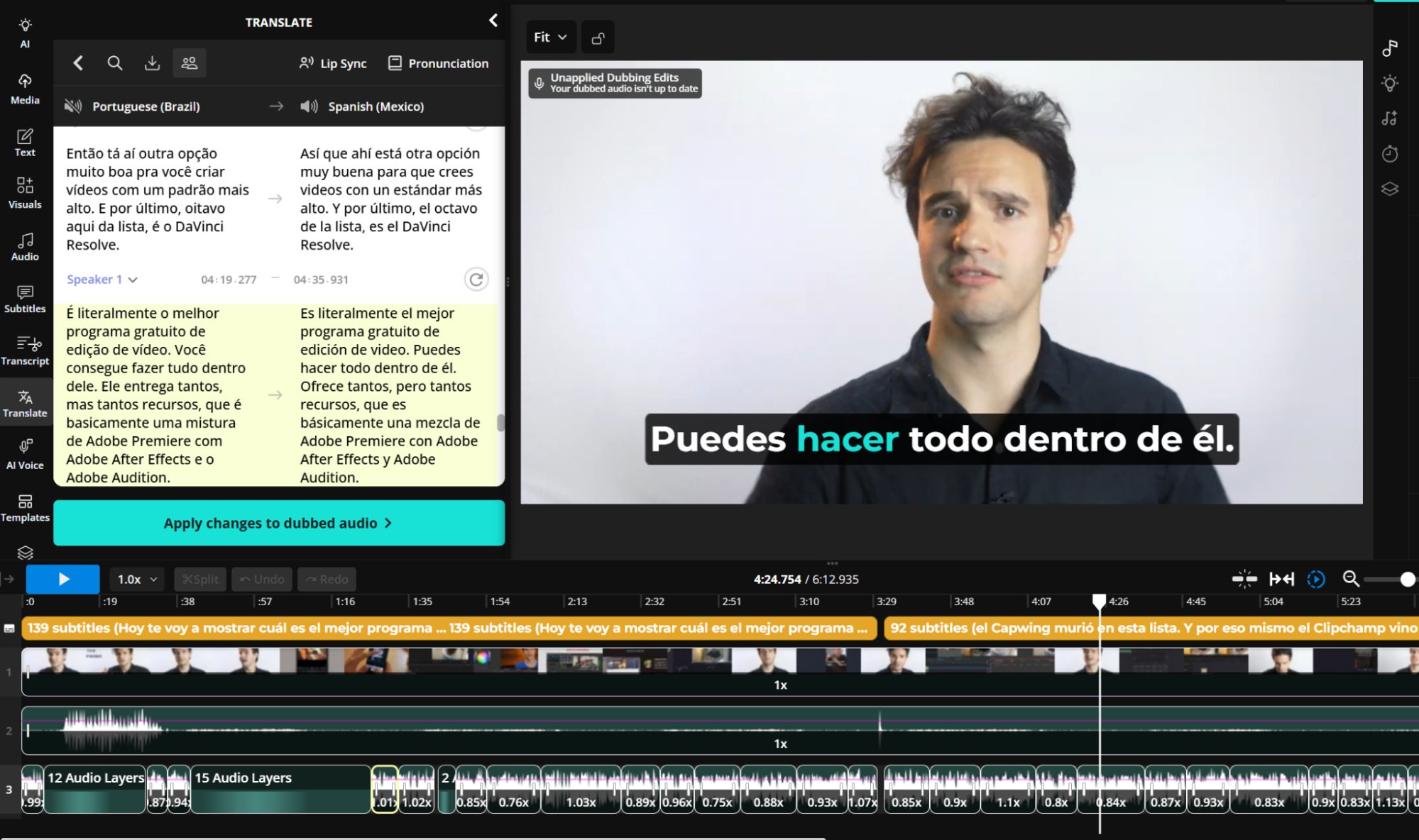
The Timeshift tool lets you drag audio segments to extend or compress their duration, adjusting speaking speed to match the original video's pacing. Lucas considers this essential.
"It's crucial to dialing your translation to a more natural speaking voice," he says. Without it, dubbed audio can sound rushed or unnaturally slow, and either one costs you retention.
For creators exploring video localization for the first time, this combination of AI-generated audio with manual fine-tuning sits in a practical middle ground between fully automated translation and expensive professional dubbing.
One telling quality signal: no viewers have commented negatively on the AI dubbing.
"The audience doesn't seem to be bugged about it," Lucas says. "Which may be a good thing, right?"
He credits the Timeshift adjustments for making the final audio feel natural enough that viewers don't notice it's AI-generated.
What Other Creators Should Do
Lucas's advice is straightforward: run both experiments and let the data decide.
"Do the same thing I did. Test how the audio track feature performs on your main channel. But also publish the same video in tandem on a separate localized YouTube channel. This way, you can see for yourself which path will bring the best results."
Beyond that, his biggest lessons:
- Start with a culturally adjacent language. The closer the cultural context between your current audience and the target audience, the better AI dubbing will land. Lucas chose Spanish because the references, humor, and preferences didn't need to be rebuilt. He's since tested French, German, and Italian with Kapwing and reports that "it really worked like a charm" across all of them.
- Build each channel's visual identity from scratch. Don't port thumbnails between channels. Research what's working in the target language's search results, identify the patterns, and design accordingly. Reusing assets risks duplicate content penalties and guarantees you'll look out of place in a market you don't yet understand.
- Fix the pacing before you publish. AI-dubbed audio frequently runs slightly too fast or too slow. The Timeshift adjustments are the difference between "this sounds weird" and "I didn't even notice it was dubbed."
- Give it 90 days. Short-term data from a new channel is unreliable. Lucas's dedicated channel needed time to build algorithmic momentum before the growth became clear.
The Takeaway
Lucas expected the experiment to be informative. He didn't expect it to be this decisive.
"I didn't expect my Portuguese viral video to also get higher traction on the Spanish channel," he says. "The results came really fast. And that was a sweet surprise for me."
The surprise extended beyond views. He's now selling digital products to his Spanish-speaking audience. "Something I thought would be impossible two years ago," he says. The revenue opportunity in non-English markets isn't theoretical for Lucas. It's generating income from an audience he once thought was unreachable.
The data from this test won't apply identically to every creator. Channel size, niche, and audience demographics all play a role. But the directional finding is hard to ignore: for Lucas, a dedicated localized channel outperformed YouTube's built-in multi-language audio by a factor of 100. The same dubbed audio, distributed differently, produced completely different outcomes.
For creators ready to try localization, Kapwing's Video Translator handles the dubbing, subtitle generation, and transcript export in a single workflow. The audio is only the starting point. The real work, as Lucas demonstrated, is in how you package and distribute it.
For the broader data on why video translation matters and how it affects engagement across the industry, read our companion piece: Video Translation Statistics: How Many Creators Localize Their Content in 2026?