Can You Record at School Without Permission? What Students & Teachers Need to Know (2026)
Recording at school isn’t always allowed—here’s what you need to know before you hit record.
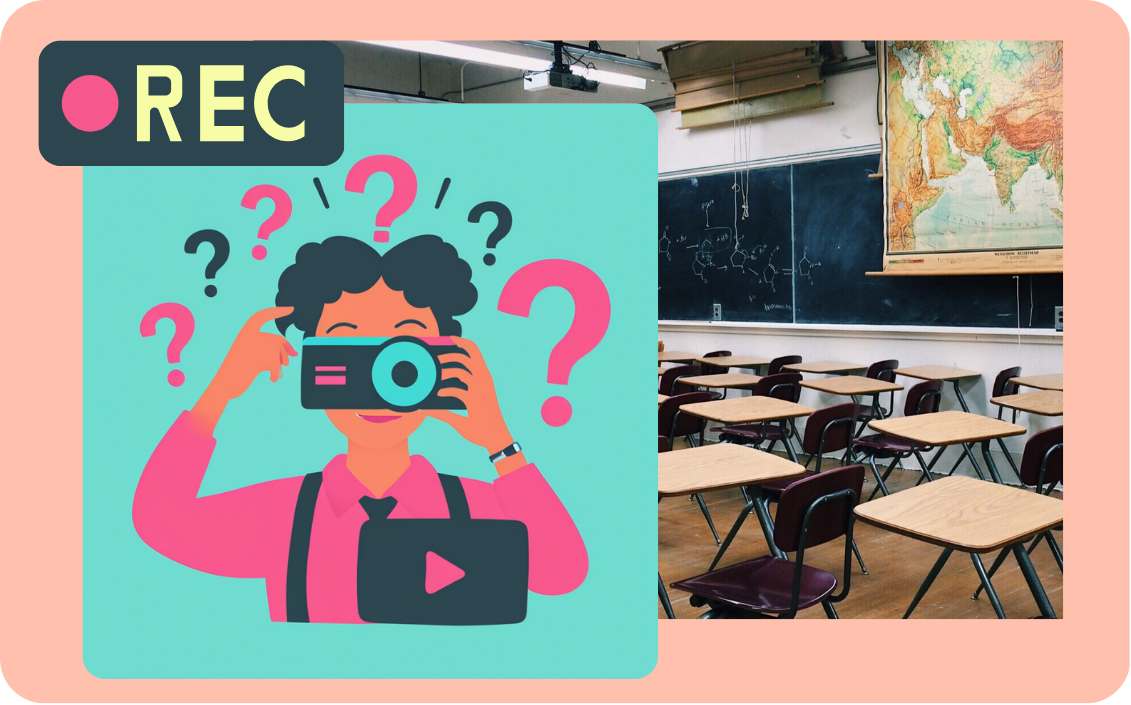
Thinking about recording a video at school, but not sure if it’s allowed?
Whether you're filming a class project, capturing a funny moment with friends, or recording a lesson to review later, the rules around video recording in schools can be confusing. As a former high school teacher, I’ve seen firsthand how powerful video can be for learning, but privacy concerns & legal considerations often gave me pause while I was recording in the classroom.
This guide breaks down what’s actually allowed, what depends on your state, and how to record responsibly at school in 2025.
Table of Contents
- Can You Record at School Without Permission?
- Can Teachers Record Students?
- Can Students Record Teachers or Other Students?
- Can You Post Videos from School Online?
- What to Do If Someone Recorded You Without Permission
- Final Thoughts

Can You Record at School Without Permission?
Recording laws in the U.S. largely come down to consent. Some states follow “one-party consent” rules, meaning only one person involved in a conversation needs to agree to the recording. Others require everyone involved to consent. A reliable breakdown of these differences is available in this 50-state survey of recording laws, which explains that most states allow one-party consent, while a smaller group—including California—require all parties to agree.
This distinction matters because video and audio are treated differently. Silent video recordings are often less restricted, but once audio is included, stricter wiretapping laws may apply. For example, California law prohibits recording a “confidential communication” without everyone’s consent, which can carry legal penalties.
On top of state law, school policies play a major role. Even if recording is technically legal under state law, schools can still restrict it or discipline students for violating school rules. More broadly, U.S. communications privacy law makes clear that recording conversations without proper consent can lead to civil damages or legal claims depending on how the recording is used.
Can Teachers Record Students?
Generally, teachers can record classes for student support and educational purposes without any legal issues. Some reasons you might do this include supporting an absent student, allowing students to review material, or allowing classwork to continue at home. (SCLS of California) Recordings should be for a limited period, and teachers should have a clear reason for taking the video.
Schools have to take “reasonable steps to protect student privacy” according to FERPA - this means that videos should not be accessible to third parties and should obscure any personal information about the students if possible. (FAQs on Videos under FERPA). Additionally, it's still best practice to ask students and parents for permission before recording anything in your class.
Note that videos taken for law enforcement purposes are excluded from FERPA as they are not educational records, according to the updated FAQs that the US Department of Education released in 2025.
Some tips on recording in the classroom as a teacher:
- Do Ask Parents First. Create a parent permission form or customize a media release form template to make sure families are informed about your recording process. Outline what the videos will be used for, when they will be taken, and what details might be included.
- Remove Personally Identifiable Information (PII). According to FERPA, if a student is "featured" in a video, it may be considered part of the student's education record and therefore subject to increased privacy protections. Whenever possible, obscure or remove all student information from videos. With some simple video editing software, teachers can crop, redact, or blur the faces or identifying information in a video, and create moving blur sections so that PII remains concealed throughout the content.
- You can also use a screen recording software to record your voice and computer screen without using the webcam. A screen recorder or voiceover can help avoid student faces, information, and voices in the background.
- Keep Content Professional: Make sure your videos are appropriate and represent your school well. Schools can take disciplinary action if your video content is found to “disrupt the learning environment,” even if the video does not feature students.
- Teach Digital Citizenship & Media Creation: Common Sense Media has great lesson plans to help students learn to be safe and respectful online. Also, consider demonstrating your video creation skills via a screencast. Your students can learn from your content AND your video-making process!
- Educational Use vs. Social Media: FERPA does not actively prohibit teachers from recording social media material in class, but schools may still have their own rules, and additional consent forms and processes may be necessary. Check in with your school, your employee handbook, and students and parents before posting.
- Prioritize Accessibility: Tools like Kapwing's Caption Maker can help you add automatic captions to the video, making it more accessible for parents and hard-of-hearing students alike.

Can Students Record Teachers or Other Students?
If you’re a current student, your school likely already has a policy about appropriate recording. Check your student handbook, and ask school administrators for clarification if needed. Generally, you can record videos of yourself but should ask permission before recording teachers, administrators, or other students.
In some parts of the U.S. with "two-party consent" laws, recording, or taking video or audio of someone without their knowledge is considered illegal. This guide describes recording laws by state.
Some tips on making videos at school as a student:
- Get Consent: Ensure everyone in the video agrees to be recorded. Describe how you will edit the product and where you will post it to everyone involved. Wait for them to say yes before moving forward. If someone will be featured in a video you're making but doesn’t want to be in the final post, ask them if you can use tools like Kapwing to blur or crop them out.
- Choose Time and Place Wisely: Avoid recording during class time unless permitted. Stick to free periods or approved times.
- Get Final Product Approval: Ensure the finished version of the video is approved by everyone involved before posting. Adding effects, text, and images can be fun, but these additions can also change how someone feels about being involved.
- Have Fun: Creating videos can be fun and build skills - content creators and filmmakers all got their start somewhere. Learn & experiment with video editing to make something you're excited to share.

Can You Post Videos from School Online?
Even if a video was taken legally, sharing it publicly can introduce a new set of risks. Schools often have stricter rules around distribution than recording itself, especially when content involves other students, teachers, or classroom activities. What might be acceptable for personal use (like reviewing a lesson) can become a problem once it’s uploaded to platforms like TikTok, Instagram, or YouTube.
One major factor is student privacy. If other students are clearly identifiable, the video may fall under protections like FERPA. In those cases, sharing the video without proper consent can raise serious concerns, particularly if it exposes personal information or becomes widely accessible online.
There’s also the issue of school policy and disruption. Even if a video doesn’t break any laws, schools can still take action if the content is seen as inappropriate or harmful to the school environment. For example, posting videos of classroom behavior, conflicts, or teachers without context can quickly escalate.
Social media adds another layer of complexity. Once a video is posted, it can be difficult to control how it’s shared, interpreted, or reused by others. A clip that feels harmless in the moment can spread quickly, reach unintended audiences, or impact someone’s reputation.
Before posting anything from school, it’s worth pausing to consider a few key questions:
- Has everyone in the video clearly agreed to be recorded and to have it shared?
- Does the video include any identifying information about students or staff?
- Could the content be misunderstood, taken out of context, or cause harm?
What to Do If Someone Recorded You Without Permission
If someone has recorded or posted a video of you at school without your consent, take the following steps:
- Ask for Removal: Request the person to delete the video or change its privacy settings.
- Notify School Authorities: If the person refuses to do as you ask, tell your school's administration right away. You might also involve parents, colleagues, or other adults for support. Make sure you know exactly what you're asking for: do you want the video deleted? Removed from public view? Something else?
- Document What Was Posted: Take screenshots (if you can see the video) and describe the recording in detail. Likely the video will be viewed as a part of the disciplinary process regardless, so it's important to collect your own evidence and represent the content accurately.
- Tell Anyone Potentially Affected by the video (family, other people at school, etc) about what happened. If the video has been posted, warn them the footage might be viewable to the public or third parties.
- Report the Video: Platforms like Instagram have tools to help you report the video and request its removal from public view.
Schools are public places, so always assume it's possible you are being recorded when you're on campus. However, even in one-party consent states, you have the right to address privacy concerns with your school and the person who made the recording.
Final Thoughts
Recording videos at school can be a powerful way to learn, create, and connect—but it comes with real responsibilities.
The rules aren’t always straightforward. What’s legal under state law might still go against school policy, and what feels harmless in the moment can have unintended consequences once it’s shared. That’s why the best approach isn’t just asking “Can I record this?”—it’s also asking “Should I?”
Whether you’re a student or a teacher, taking a few extra steps—like understanding consent laws, checking school guidelines, and getting permission—can make a big difference. Respecting privacy and being thoughtful about how content is used helps protect both you and the people around you.
Done right, video can enhance learning, support creativity, and bring school communities closer together. The key is to use it responsibly.