How to Write a Newsletter: Our Success + Expert Advice from Annie-Mai Hodge
In 2025, the global average email click‑through rate across industries was just around 3.5%

Nine months ago, Kapwing's content team set sail in a new direction by relaunching our email newsletter.
Before that, we had only pushed sporadic updates — bombarding users with up to five newsletters in one month, then just one the next. It was inconsistent, and frankly, a bit chaotic.
This time, we set out with four clear objectives:
- A consistent publishing cadence
- A genuine sense of connection with our audience
- A clear objective for every send
- An open rate above 25%
We jumped into the newsletter world knowing its potential: to nurture relationships, inspire creators, and offer a break from the noise of ads and social media.
But translating that vision into reality? That part we had to figure out.
In the words of our newsletter writer, Chris Gorrie, here’s everything we learned, from an expert interview with Annie-Mai Hodge that reshaped our strategy, to the tactics behind our biggest wins.
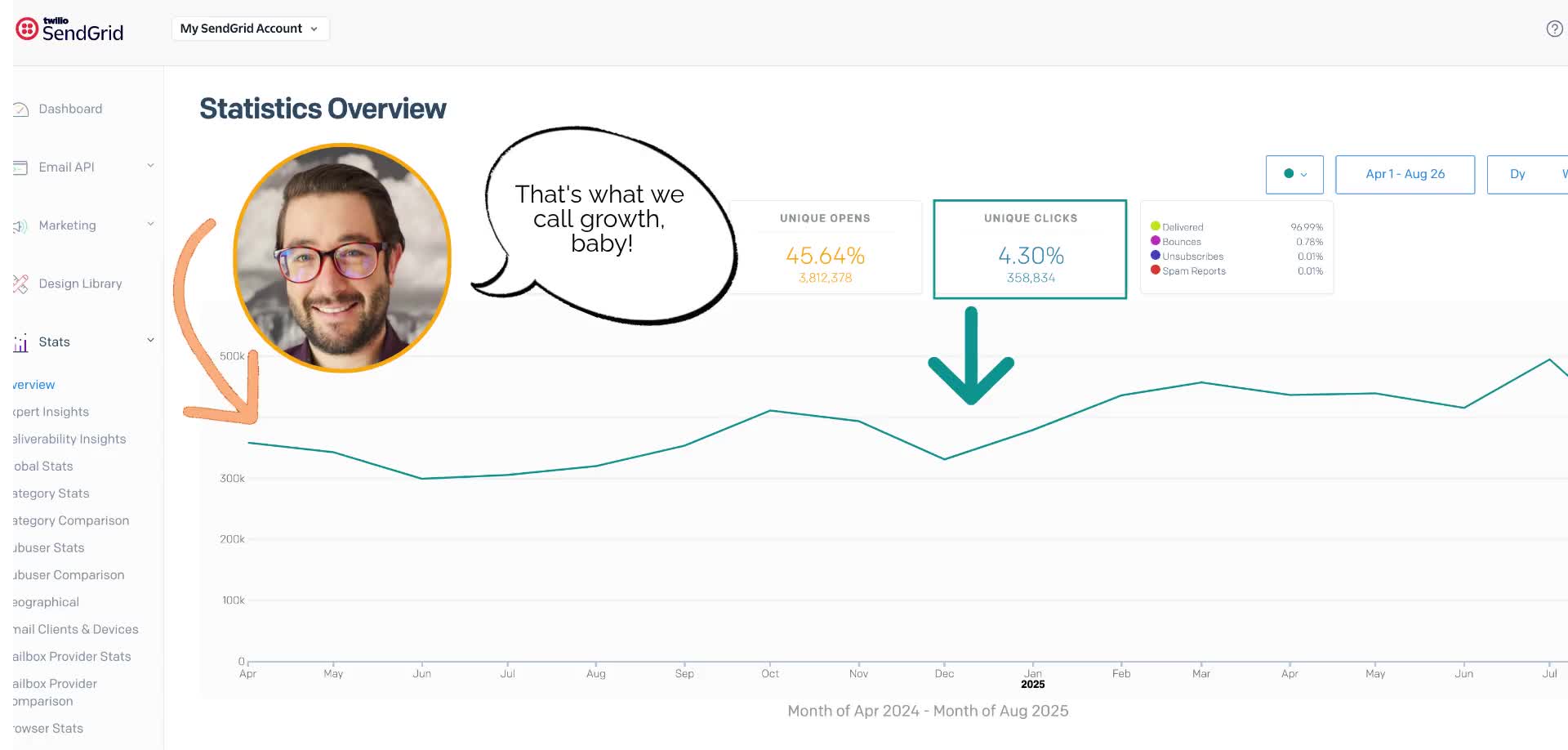
Table of Contents
Hi everyone, my name is Chris, the newsletter guy — it's great to meet you!
Since relaunching the newsletter at the close of 2024, I’ve had my fair share of highs and lows. From staring down the sad click-through rate of 0.5% to eventually tripling our average CTR, it’s been a rewarding, if sometimes trying, journey.
It took a little experimentation — tinkering with subject lines, narrative approach, imagery, link placement — and a healthy dose of insight from a newsletter expert, but I eventually hit all four goals we’d set our sights on.
I learned that cultivating trust and familiarity with subscribers doesn’t require being an ad wizard, an HTML pro, or even having glossy, expensive email designs.
It just takes some reflection on your audience’s problems and needs, developing a distinct tone of voice, and finding a reliable yet manageable publishing rhythm.
Why We Launched an Email Newsletter
Despite a growing blog and social media presence, we lacked a direct line to our audience. Social media is sometimes unpredictable, and by their nature, blogs are one-to-many broadcasts. We wanted another channel where we could speak to a person, not a crowd.
The initial plan was simple: a monthly email discussing industry news and showcasing Kapwing’s tools. But it didn’t take long to discover that a resonant newsletter required far more than just curating topics, recapping current events in our space, and hitting “send.”
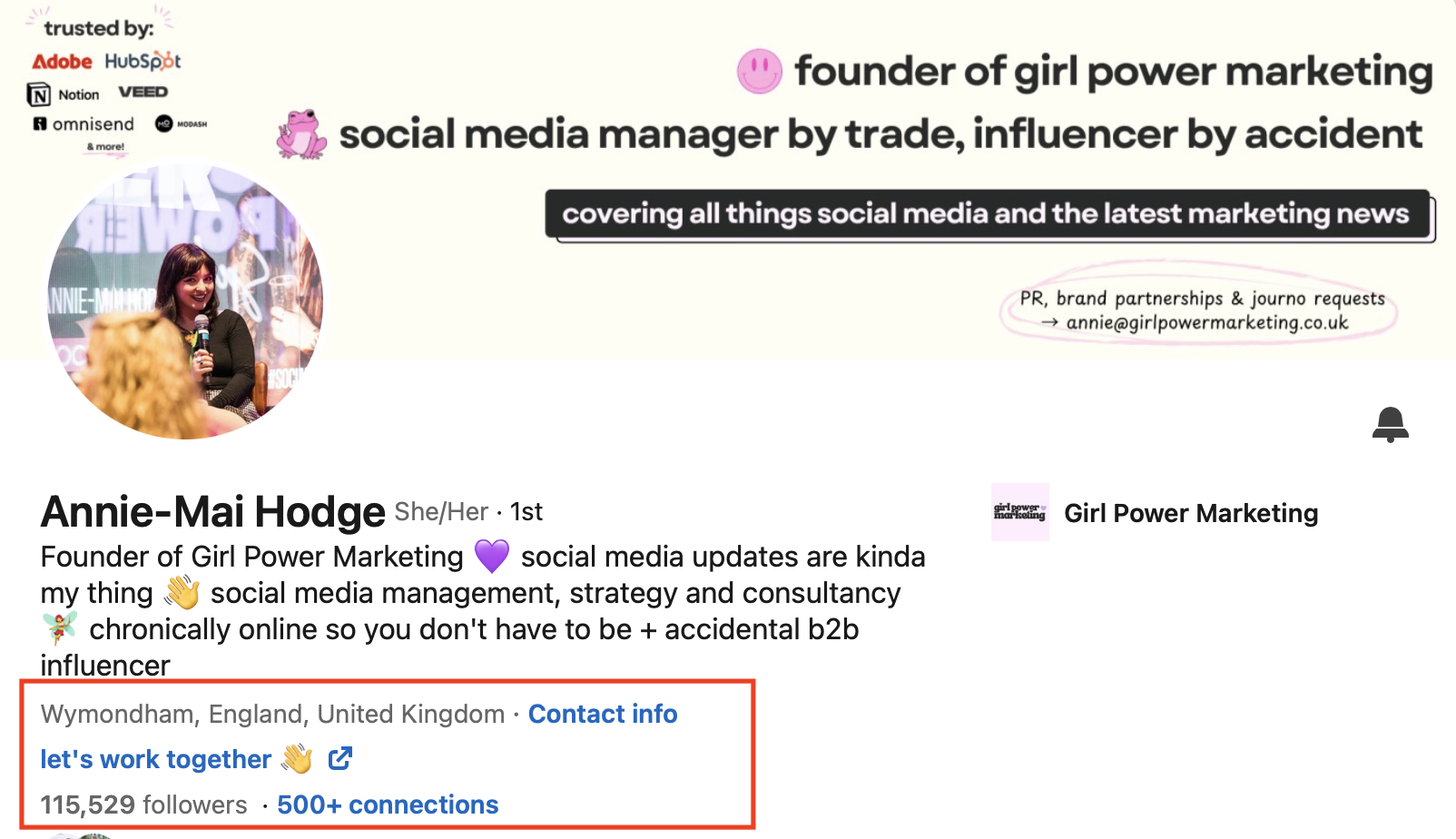
That’s when I started actively seeking out examples of newsletters with dedicated followings. I found Annie-Mai Hodge, owner of Girl Power Marketing, a UK-based marketing agency with a following of 460,000 strong across Instagram and LinkedIn.
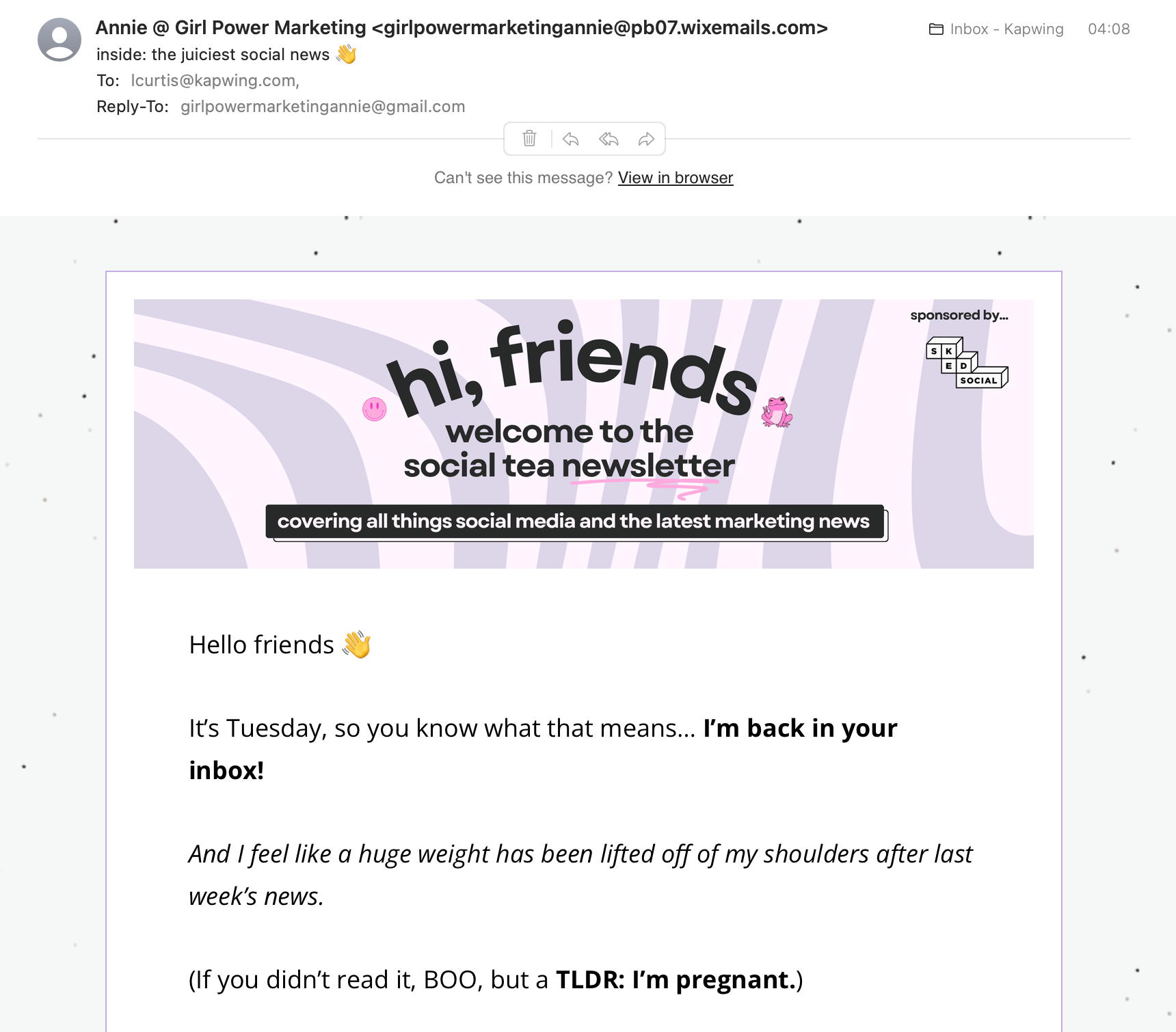
Her newsletter stood out immediately, with its easy-to-follow format and relatable tone that distilled complex social media news into an insightful and fun weekly summary.
She also actively fosters a community, making her email list more than just another marketing channel. It’s the core of a business centered on genuine audience connection. I reached out for an interview, where she shared practical guidance on cadence, formatting, balancing trend awareness with a unique point of view, and more.
Her advice was a turning point. Armed with a new framework,
I recalibrated the newsletter, shifting its purpose from announcing feature updates to building a meaningful connection with our users.
The Expert Advice That Altered Our Strategy
I sought Annie-Mai’s advice because she’d already solved the problem I was facing: turning the scattered news cycle of a crowded space into a newsletter with loyal readers.
Her entire philosophy is built around the concept of audience-first simplicity, perfectly captured by her rule:
“I explain things like everyone is five, no corporate jargon here.”
Clarity is the first of three core lessons I took away from our interview, all designed to support one another. Her newsletter’s simplicity is engaging because it’s delivered with intentional personality, and her disciplined consistency turns it into a reliable resource.
Here are the three core principles we took away from the interview and carried into our own newsletter.
1. Solve Your Audience’s Real Problems
The primary aim of Annie-Mai’s newsletter is simple: “To help marketers. I honestly never started it with the intention to gain anything from it.”
Each choice she makes was born out of her own frustrations, so she strives to put her audience’s needs first.
Having worked at two agencies before launching her own, she knew that simplifying social media news was a common pain point:
“I was spending so much time reading through what felt like essays, to get to ONE sentence in the article that I actually needed to read.”
2. Digestible Content with Personality and Purpose
Annie-Mai attracts and maintains her readership by condensing complex articles into essential takeaways. But while her focus on efficiency is great, alone, it’s not enough to have kept her 5,000+ readers around for as long as she has. It’s her distinct, developed tone of voice that transforms her newsletter from a useful digest to a must-read.
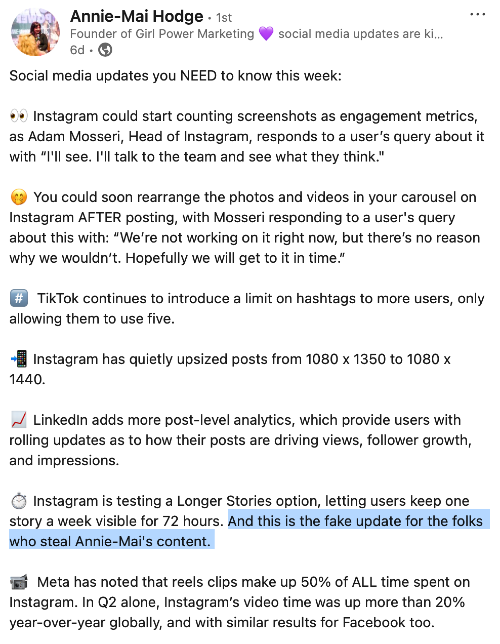
A great example is her fake updates, a playful tactic originally used to deter content thieves that unexpectedly became a reader favorite.
“Those fake updates are partly why some people KEEP reading my roundups every week,” she says, proving that a unique personality is key to creating community.
3. Find a Rhythm That Works
For a topic that moves as fast as social media, consistency is crucial. Annie-Mai’s weekly publishing cadence came about through experimentation and a personal challenge to hold herself accountable.
This rhythm has helped turn her newsletter into a dependable anchor for readers without overwhelming them. As she puts it, “showing up once per week is enough, but not so often that it feels like spam.”
How We Built the Kapwing Newsletter
Learning from Annie-Mai helped me get over my original conception of newsletters as a simple tool for one-to-one news updates and bite-sized platform demos.
I began to reimagine what our emails would look like if I could turn them into a space for connection and problem-solving. To get there, I had to rethink everything: audience targeting, storytelling, and even the way we framed Kapwing’s tools.
Understanding Our Audience
I was writing for content creators, marketers, and small business owners who wanted an easy-to-use tool to put out better content, faster — right?
I was, but this wasn’t as simple as I originally believed, and my early attempts missed the mark.
Take the newsletter focused on the Split Vocals tool, which I tied to Kendrick Lamar’s “Not Like Us.”
On the surface, it looked pretty cool, right?

The idea was to strike a balance between pop culture, news, and utility, but the communication was overly generalized and felt forced.
My opener was pure feature-speak: “Located under Audio Tools … the Split Vocals tool separates your content into three layers.” It was too generic, on-the-nose, and wasn’t animated by any personality.
The click rate confirmed this, sitting at a dismal 0.72%.

Annie-Mai’s interview made me hit pause and zero in on the basic question: Who’s actually reading this?
Her audience-first thinking isn’t so much “here’s a tool that helps you do this task” — it’s about speaking to a mindset, the frustrations, hopes, and day-to-day realities of creators.
So, I took the leap and shifted the newsletter’s content to focus on things like information fatigue, the need for community, and the jokes people pick up from being online all day. I also swapped a journalistic tone for a first-person narrator: an unnamed Kapwing employee.
The result was immediate: my new, story-driven emails with casual hooks started outperforming our old promotional CTAs.
Topic Ideation
This style shift saw my newsletter topic ideation move away from product-centric topics like "Kapwing’s Split Vocals tool" or generic trend roundups, which performed modestly.
Instead, I considered trends in the light of core reader problems. This pivot mirrored Annie-Mai’s emphasis on solving real pain points.
Naturally, I continued to weave in Kapwing’s tools and product updates, but now they were seamlessly integrated into a larger, character-driven story.
Writing and Structuring
Structurally, I revamped my writing flow over time to follow this fairly simple framework that I adjust depending on the needs of the larger story:
- Novel subject lines & preheader
- Hook with a mental movie
- Amplify the problem (or solution)
- Position Kapwing’s resources or tools as the fix
- Weave in social proof
- Provide actionable value
- Use “curiosity gaps”
Subject Line and Preheader
Early subject lines like “The first music video from OpenAI 👀” and “Your Content Needs Help 🚨” were literal and explicit, but hardly intriguing.
The preheader text felt tacked onto the subject line like an afterthought. Open rates under 17% confirmed that this approach wasn’t creating enough reader curiosity.

Now compare these with more successful subject line-preheader pairings like:
- Subject: The AI video that made us rethink everything.
- Preheader: He has better continuity and delivery than most influencers. We figured out exactly why.
- Subject: Too many AI tools, not enough time? ⏳
- Preheader: New videos every week that decode AI tools, editing styles, and more — for creators like you.
These feel a lot less promotional and formulaic. The subject lines are closer to something you might see from a friend, and they generate interest by giving a partial preview and promising value.
An average open rate of 27% between these two emails gave me the confidence to continue with this approach.
Hook with a Mental Movie
Typically, I open a newsletter with a relatable struggle or an unusual event, using sensory detail and specific info to create a mental movie the reader can enter.
In the example below, I relayed a story of Kapwing’s Bob the Cat (our logo) announcing as he enters the Kapwing office.
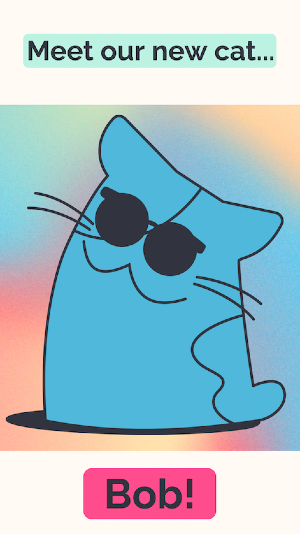
He thinks out loud about a basic ongoing issue in the AI space: information fatigue and oversold products.
He then hints at a new YouTube series, a potential solution.

Amplify the Problem (or Solution)
Next, I either hone in on the original struggle further, illustrate an example of the issue, or turn the event in the hook into an unexpected solution.
Using the same example, the next scene of the email shows the narrator reflecting on Bob the Cat’s announcement.
They tie Bob’s comment about separating the “helpful from the hype” to their own experience and then make it relatable to anyone (“A lot of creators are burning out on AI tools…”).

Position Kapwing’s Resources or Tools as the Fix
I position Kapwing resources or tools as a solution to the problem or struggle, using the larger narrative frame to help this feel like a natural extension of the story instead of a sales pitch.
In the example we’ve been using, I discuss Bob the Cat’s solution to AI burnout that the intro set up: his new YouTube series.
It feels like a casual continuation from the intro hook, simply relaying that Bob has delivered on his promise to create a new YouTube series to help creators.

Weave in Social Proof
I try to place social proof that’s here and there throughout an email if possible. This can take the form of appealing to an expert, showing a breakdown of monetization earnings, and more.
In this example, I use the AI influencer Big Yowie’s expertise as a form of social proof.
By mentioning Yowie’s 429,000 followers and 35 million views, the creator’s YouTube interview and blog features become authoritative testimonials on how to create a profitable AI influencer.
Provide Actionable Value
I always try to solve a problem for our readers. After all, that is Annie-Mai’s primary aim for her newsletter.
In the Yowie email example, I included a series of easy-to-digest, actionable steps that creators could use to help them build an AI influencer, which condensed the deeper dive of the interview or blog article into four short bullets, as you can see below:

Use “Curiosity Gaps”
Chances are, you’ve watched a Netflix show where each episode ends on a note that makes the week-long wait for the next installment feel almost unbearable. This is a “curiosity gap” — essentially a cliffhanger.
Although TV shows and YouTubers have been using this technique for years, I first learned the email form of it from well-known Australian newsletter writer Daniel Throssell. He suggests cutting an email into several scenes that end with curiosity gaps to maintain narrative momentum.
You see this in action in the Bob the Cat example above.
The first scene ends with Bob pitching a hypothetical YouTube series as a solution to AI burnout. Since the reader naturally wonders about the series and its solutions, this creates a curiosity gap.
The next scene deepens the curiosity gap by pausing to reflect on Bob’s words, rather than jumping straight to the answers the reader is looking for. Final resolution is delayed until the third scene.
A Note on Newsletter Design
My design choices also became more intentional, aligning with Annie-Mai’s “less is more” ethos.
Her advice to not overcomplicate things led me to avoid using huge headers and imagery in the newsletter’s intro.
Instead, I now move seamlessly from the subject line into the first line of plain-text content, which allows the subject line and preheader text to better complement the email and fluidly move readers into the story without any distractions.

Her comments on accessibility also showed me that I might’ve been overdoing it on the emoji front.
Whereas I’d previously used relevant emojis in place of bullet points in lists, I now keep it to only one or two in the entire email body.
The last thing I want is forcing someone using a screenreader to withstand hearing “slightly smiling face … exploding head … four control knobs adjusting audio levels on a mixing console.”
The TL;DR on Our Own Experiments and Metrics
Around six months into our nine-month journey, the backend finally started telling a coherent story. Here’s the quick read on what changed and what actually moved the needle for us.
Headline Numbers (List ≈ 50,000):
- Average open rate: from 19% → 35% (+16 percentage points / +84.21% increase)
- Average CTR (unique): from 0.83% → 2.5% (~3× increase)
Top-performing Subject Lines:
- Too many AI tools, not enough time? ⏳
- The AI video that made us rethink everything
- What a $34K hotdog taught me about marketing
One Experiment That Flopped (and Why):
Early on, I leaned into feature-first rundowns and a few emoji-as-bullets lists. The emails were tidy, but they read like mini release notes. Opens were actually pretty good, but clicks definitely sagged.
Take the newsletter on the then-new AI Eye Contact feature:

The open rate was fairly high at 38.25%, but clicks were all the way down at 0.44%.
Accessibility also suffered (screen readers voicing emoji descriptions is… not a vibe), and most of my “designed” issues with big header images underperformed — exactly the stuff I later pared back.
Here are a couple of examples of the design style that worked against us:

The average click rate between these emails was 0.75%.
Not the lowest overall, but certainly not what I hoped to see.
One Experiment That Stuck (and Why)
Shifting to a first-person narrator and the curiosity-gap structure (scene → reflection → delayed resolution) with mindset-based topics (creator anxiety, inspiration sources, practical shortcuts) lifted clicks dramatically, even if open rates sometimes suffered.
Let’s look at the stats for my Bob the Cat and Big Yowie newsletters:

Although open rates for these two emails hovered around an average 27% (not bad, but lower than the AI Eye Contact newsletter), the average click rate of 2.26% was a huge improvement over 0.44%.
From just these two emails, I was able to generate a combined 1,063 unique clicks (factoring in the separate versions sent to Pro vs. Free users).
This updated structure works much better because the story frame helps me weave tools narratively instead of pitching them, encouraging readers to follow along to the CTAs. This approach also primes readers to take action by subtly generating emotional investment.
In contrast, the earlier approach felt more like pitching, which either quickly put off a larger number of readers or invited them to skim and find a button, meaning they were never primed for the CTA in any meaningful way.
Changes We Made Along the Way
- Fewer images, more plain text. We dropped the big hero header and let the copy start immediately under the subject line. Result: more people reached the first link.
Yes, this aligns with Annie-Mai’s “less is more,” but goes against some general advice from big-name platforms like HubSpot. Hypothesis? What works for your brand, like Annie says, “totally depends.” Testing is the name of the game.
- Varied issue length, on purpose. Many newsletter guides will tell you to “keep it short.” While I wouldn’t call this bad advice, I found that different lengths can work well, depending on scope and context.
While readers often enjoy ~600-word issues, slightly longer stories (~900-1000 words) with tight scene breaks can also perform surprisingly well. One reason is that the longer form allows for soft CTA or resource-link placement in multiple places.
- Link placement moved mid-body. Early CTAs at the top looked efficient, but were too similar to the landing page design and copy.
My rationale: When people are Googling, they’re actively looking for a solution and ready to take action — but when they open an email, they’re not usually ready to click on something right away. This is why mid- and end-story links tend to perform better. They allow time for readers to gain context and invest emotionally in the newsletter topic.
- Design trims: Fewer emojis (max one or two), no decorative header, scannable subheads, short paragraphs. Accessibility improved, and skimming became easier.
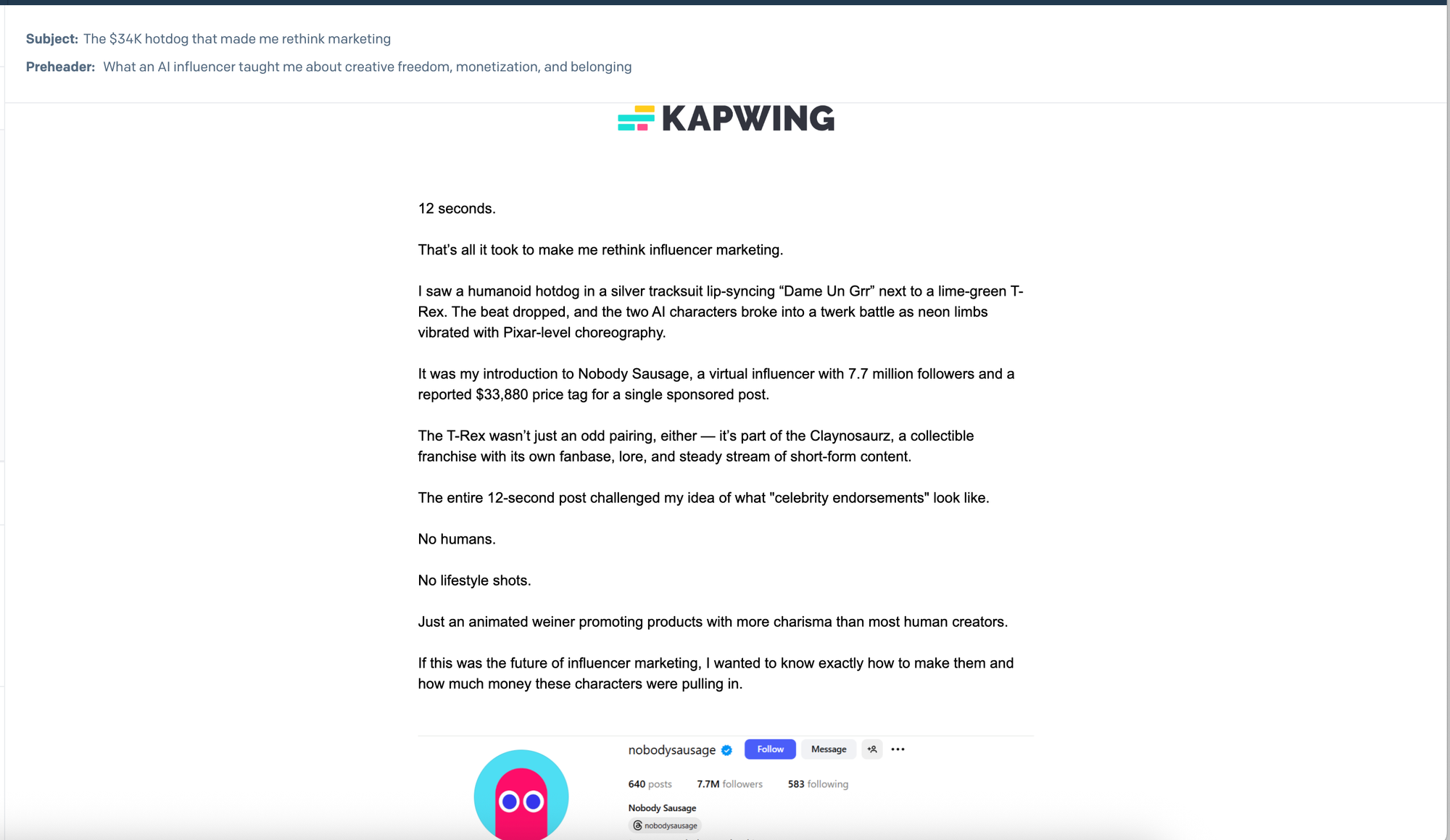
Below is an excerpt from our latest 2025 newsletter intro, bringing together all the strategies we’ve outlined.
The Newsletter Starter Checklist
If you’ve read this far, you’re probably already sketching your own newsletter. Here’s a quick starter checklist we wish we’d had nine months back:
- Audience promise in inaugural newsletter: One sentence that finishes with something like “Every issue helps you ___.”
- Cadence you can keep: Monthly is fine to start, but bi-monthly or weekly can be even better once you nail down tone and style. Whatever you land on, just be consistent.
- Voice & POV: Pick a narrator and stick with it. It can be you, a fictional talking cat, an unnamed employee of your company, and on and on.
- Subject line bar: Aim for novel and conversational, not corporate.
- Opening hook: Start with a mental movie, then unpack the lesson.
- Structure: Hook → tension → solution (soft CTA) → proof → actionable steps → primary CTA.
- Design: Plain-text first, minimal imagery, short paragraphs, mindful emoji use for accessibility.
- CTA strategy: One main click, one or two optional deep dives.
- Metrics to watch: Opens, CTR, saves/replies, and list hygiene (unsubscribes, bounces. Also track performance by topic and format so you can see what really works for your audience.
If you want a working example in your inbox (and future teardown fodder for your own), you can subscribe to our newsletter — and then shamelessly copy the parts that work for you. We’ll keep testing and sharing what we learn.
Feel free to check out the Kapwing newsletter in action and subscribe here.