7 Key Differences Between Brand Creators and Influencers
How I went from a 22K-follower college golf creator to producing IG content that reached 1.4M views at Kapwing.

Transitioning from creating content independently to working as a company creator has given me a new perspective on the process behind every post. Running my own platform taught me how to rely on instinct, authenticity, and direct audience connection, while creating content for a company introduced me to strategy, structure, and collaboration at scale. This summer at Kapwing, I’ve been exploring how these two approaches intersect and how combining creativity with process can make content more purposeful and impactful.
Hi, I’m Jasmine Chen, and I’ve spent the past four years building my own social media platform around my life as a college golfer. Through posting tournament highlights, golf tips, and behind-the-scenes moments, I’ve grown my following to over 22,000 people, a journey made possible by the NCAA’s new NIL (Name, Image, and Likeness) rules.
In the summer of 2025, I joined Kapwing as a Content Marketing Intern. During the 12-week internship, I created short-form videos for TikTok, Instagram Reels, and YouTube Shorts, focusing on content that helped inspire and educate content creators who love video editing.
The experience has taught me how to translate my skills as an independent creator into a collaborative, data-driven environment. I’ve learned to balance instinct with strategy, spontaneity with structure, and creativity with purpose — producing content that feels both authentic and impactful.
1. Vision & Goal: Personal Brand vs. Brand Story
As an influencer...
I’m responsible for running my own brand — deciding what to post, when to post, and how to present myself. On my Instagram account, I share life as a Division I college golfer through tournament highlights, golf tips, and everyday moments from campus. Because the content comes directly from my own experiences, it’s easy to create and feels natural to my audience.
Many of my 22,000+ followers are young athletes or golf fans looking for advice or an inside look at college golf. That reach also opens doors for monetization through brand collaborations, which makes it important to be intentional about the image I present. I keep in mind that my audience includes both kids and adults, so I focus on sharing content that’s authentic but also professional.
Maintaining a personal brand requires constant self-awareness. Every post shapes how followers and potential partners see me, so I focus on creating content that reflects who I am while also aligning with the kind of brand companies want to collaborate with.
As a company content creator...
My work is part of a larger brand identity. At Kapwing, every video I make, whether it’s an editing tutorial, an AI news update, or an office culture clip, needs to fit the company’s tone, values, and marketing goals.
Unlike running a personal account, where I control all decisions, company content is a team effort. I work with managers and other creators to brainstorm ideas, plan campaigns, and review content before it’s published. The success of a post isn’t measured only in likes or views; it’s about whether it drives product awareness, educates creators, or strengthens the brand’s connection with its community.
This means being flexible with creative ideas while still following brand guidelines. It also means paying attention to trends, audience feedback, and performance data to help shape future content. My goal is to make videos that are engaging, on-brand, and valuable for the people we’re trying to reach.
What I Learned
Working on my personal brand versus a company brand showed me just how different the structure and decision-making behind content can be.
With my personal brand, I’m in full control. I decide what to post based on what feels right in the moment. The process is flexible and reactive, often inspired by daily life or trends I happen to see. There’s a less formal strategy, and success is measured mainly by audience engagement and connection.
With a company brand like Kapwing, the process is far more intentional and organized. Content ideas are shaped by past performance data, SEO research, and documented best practices. We have a clear understanding of what has worked before, and that history informs the direction of new videos. The planning process is structured, with clear calendars, collaboration, and approval steps to ensure every post aligns with a larger marketing strategy.
The biggest difference is that personal brand creation is spontaneous and personality-driven, while company brand creation is research-backed, highly organized, and strategically designed to achieve measurable goals.
2. Content Freedom vs. Creative Framework
As an independent creator...
I have the freedom to experiment daily with my content. On my personal account, that means testing different types of golf content, whether it’s short tutorials, tournament recaps, or lifestyle posts around being a Division I athlete. Because the account is built around my own life, new content ideas naturally come from practices, competitions, and day-to-day experiences. A lot of my content has come from ideas on the spot.
The flexibility is valuable, but it also means accountability falls entirely on me. There’s no built-in structure or historical performance reports to guide my decisions. I measure success by monitoring engagement, such as likes, comments, shares, and follower growth, and adapt my approach based on what I see resonating. It requires constant self-reflection and an awareness that the image I present affects both my audience and potential brand partners.
As a brand creator at Kapwing...
Every piece of content has to fit within a structured system of brand voice, visual identity, and the company’s broader marketing goals. Unlike my personal account, where I can post spontaneously, Kapwing’s content process is intentional and organized. Ideas are influenced by social-SEO research, performance data, and documentation of what’s worked in the past, which means the videos I create are grounded in strategy rather than instinct.
Campaigns are scheduled in advance, brainstormed with the team, and refined through review. That process pushes me to think more critically about content — how it serves the audience, supports company goals, and contributes to long-term growth. It’s made me a sharper creator, teaching me how to use past research and analytics to guide new ideas, and how to produce higher-quality videos that feel both engaging and purposeful.
What I Learned
From managing both my personal brand and creating content for Kapwing, I learned how different the creative process can be depending on the structure behind it. On my own, I saw how spontaneity and lived experiences fuel authentic content, but also how that flexibility can lead to inconsistency when I wait for inspiration. At Kapwing, I learned the value of planning. That structure showed me how to create videos with a clear purpose and long-term impact, while still keeping them engaging.
The biggest takeaway is that personal content often thrives on quick creativity, while company content needs both strategy and consistency to flourish. Understanding and combining both approaches at Kapwing has made me more disciplined, adaptable, and effective as a creator.
3. Speed & Scheduling: On-Demand vs. Organized Ops
As an influencer...
Content moves fast. I can film a golf drill, recap a tournament, or share a lifestyle moment and post it within hours. That flexibility keeps my content authentic and relatable, especially when I can quickly adapt trends into my niche. But it also makes consistency hard. Since so much of my content comes from lived experiences, I sometimes find myself evaluating moments in real time, wondering if they’ll make good content, instead of just living them. That constant balancing act can make it harder to stay present while still keeping up with an audience that expects regular posts.
As a brand creator...
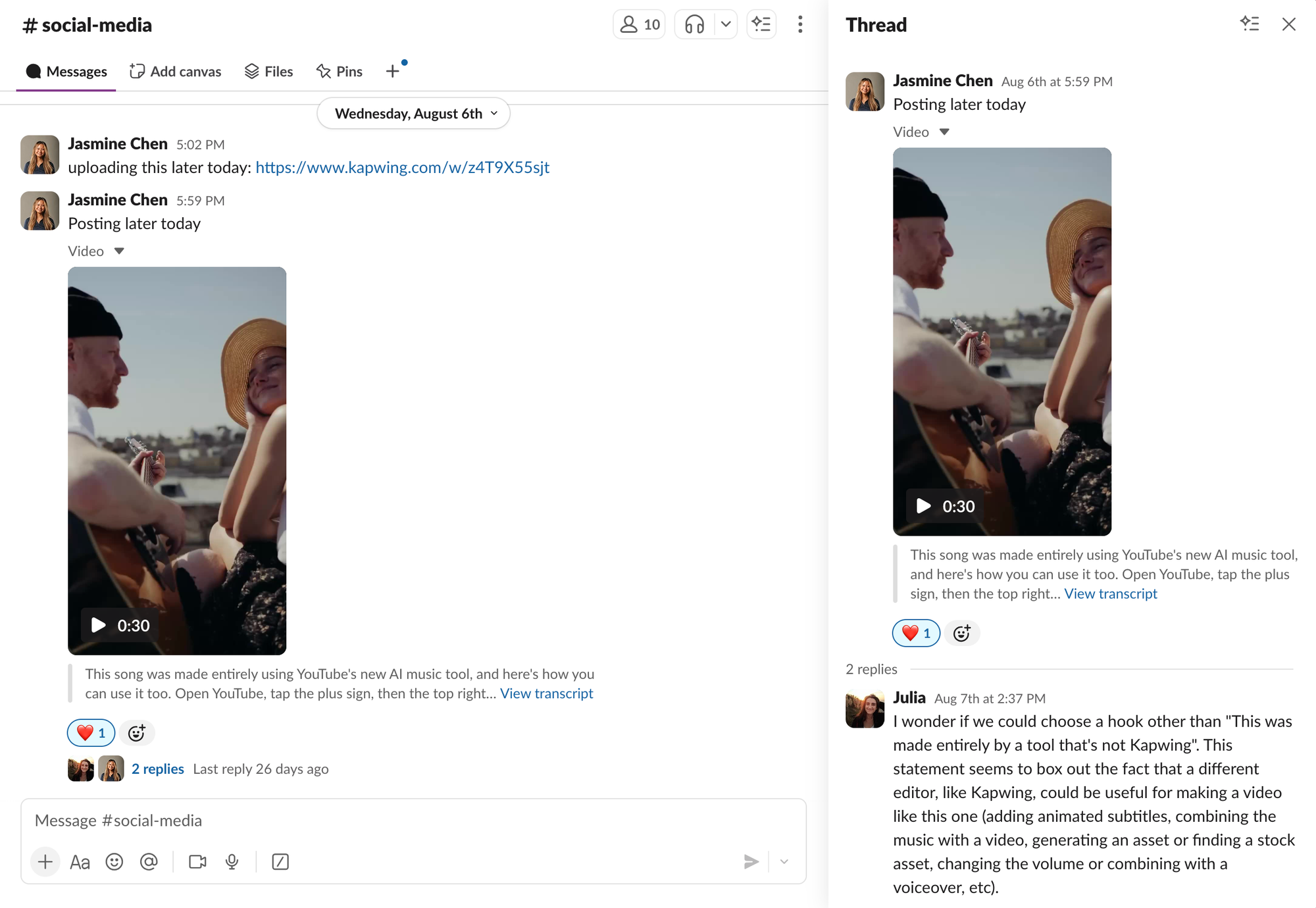
Coming up with ideas is much easier because of the structure and feedback built into the process. Weekly schedules and manager assignments give direction, and brainstorming sessions add more angles to explore. Since everyone is on different algorithms, teammates share the trends they see, which creates a wider pool of ideas than I’d ever have on my own. After creating a draft, I post videos into a Slack channel where I can gather more feedback before publishing. This system not only keeps the workflow organized but also makes the final content more polished and effective.
4. Metrics & KPIs: Engagement vs. Business Impact
As an influencer...
Success is measured through engagements such as likes, comments, shares, saves, and follower growth. These metrics reflect whether content resonates, but the deeper value is in building my personal brand, credibility, and long-term opportunities like sponsorships. Even a simple, low-effort post can have outsized impact if it’s relevant and relatable to my audience.
As a brand creator...
Success is tied to business outcomes: traffic, leads, conversions, and brand lift. Engagement alone isn’t enough; content must align with broader goals, guided by social-SEO, past performance, and audience insights. The structured feedback and data-driven approach allow for deliberate content decisions that scale impact beyond immediate views.
What I Learned
Personal metrics reward creativity and authenticity, while company metrics prioritize strategy and measurable business results. Navigating both has taught me to balance instinct with data, and creativity with structure.
5. Going Viral
As an influencer...
Going viral is a mix of relevance, timing, and relatability. On my personal account, my most viewed video was a quick golf drill I filmed in under a minute. It resonated because it solved a common problem, was easy to follow, and fit naturally within my niche. Viral content often comes from understanding what your audience needs and presenting it in a way that feels authentic to your brand.
As a brand creator...
Virality can also come from unplanned, spontaneous moments. During my first week, a 5-second clip of interns in the office unexpectedly went viral with over 1.2 million views. It wasn’t planned, scripted, or part of a campaign, but it captured a relatable, human moment that resonated with viewers. Interestingly, this clip became the catalyst for a new content series focused on office life, shaping how we approached that bucket moving forward. Even in a structured company environment, luck and timing can spark new creative directions, and having a system in place allows you to recognize and amplify those moments.
What I Learned
Both viral videos from my persona and brand account were under 10 seconds and had a very quick and concise punchline. They were both very raw moments that I did not plan, and that's what people resonated with —organic and realistic moments that people can relate to.
6. Collaboration & Teamwork
As an influencer...
I call the shots. Even when working with editors or brands, I’m the project manager in deciding how a video is produced, the theme, and how it will resonate with my audience. Maintaining authenticity and trust is paramount, so every creative decision reflects what I believe in and ensures the content feels organic to my followers. The flexibility allows me to make quick, instinct-driven choices, but the responsibility for every outcome rests squarely on me.
As a brand creator...
Content creation is team-based. Marketers, designers, product managers, and analysts all play a role in shaping the final product. For example, during my internship, I led an interview series with popular AI creator Big Yowie. This project required cross-functional collaboration of social media strategy, the YouTube team, the article team, and my manager, all contributed to ensure each part of the content had what it needed. I was able to gather inspiration from the other teams on how they were approaching their content, so my content could mirror our brand and our content could be consistent through platforms. Working in a team provides support, multiple perspectives, and guidance, allowing me to integrate feedback and elevate the final output beyond what I could do alone.
What I Learned
Independent creators enjoy full creative control and flexibility but carry the full weight of decision-making. Company creators benefit from diverse input and structured collaboration, which helps refine ideas, highlight key insights, and produce content that is polished, strategic, and scalable.
7. Monetization & Reward Systems
As an influencer...
Monetization is direct and often unpredictable. On my personal account, income comes from sponsorships, affiliate links, merchandise, platform bonuses, and TikTok Shop. This gives creators flexibility to negotiate deals that reflect their value, sometimes earning more than initial offers. But relying on sponsorships or platform payouts can be unstable. Algorithms are unforgiving, shadowbans can occur, and even content that took days to produce can “flop.” TikTok Shop offers a more consistent revenue stream, but over-reliance risks alienating followers if content starts to feel like a sales pitch. Essentially, the algorithm and audience dictate income, which makes personal brand monetization high-reward but also high-risk.
As a brand creator...
Compensation is structured and predictable. At Kapwing, I earn a consistent salary, along with benefits like healthcare, PTO, and career growth. Revenue isn’t tied directly to views or clicks, and flops don’t affect pay. Your work contributes to broader company performance rather than personal income. While independent earning opportunities are limited, the stability allows creators to focus on strategy, quality, and experimentation without the pressure of immediate financial consequences.
What I Learned
Independent creators trade stability for flexibility and higher upside, navigating unpredictable algorithms and audience preferences to generate income. Brand creators sacrifice independent revenue potential but gain security, support, and the freedom to focus on long-term content strategy without the constant pressure of monetization.
Conclusion: Navigating Creativity and Structure
Content creation exists at the intersection of intuition and strategy. Spontaneous ideas, authentic experiences, and direct engagement with an audience drive resonance and connection, producing moments of virality and relevance that feel natural and immediate. Yet, creativity alone is rarely enough to sustain growth or achieve consistent impact. Structured processes, collaboration, performance data, and strategic planning provide a framework that transforms fleeting ideas into polished, scalable content, while ensuring alignment with broader goals and long-term objectives.
The most valuable lesson is that neither instinct nor structure should operate in isolation. Learning when to rely on intuition and when to follow data or process allows creators to generate content that is both authentic and effective. By combining spontaneity with strategy, creators can maintain engagement, foster trust, and produce work that consistently delivers impact, whether through audience connection, brand growth, or measurable outcomes. Ultimately, effective content creation is less about choosing between freedom and structure and more about integrating both to create work that is intentional, adaptable, and meaningful.